



Articles
Sliman Mansour, the painter who turned art into a symbol of Palestinian resistance
Oct
Article theme: Arte.
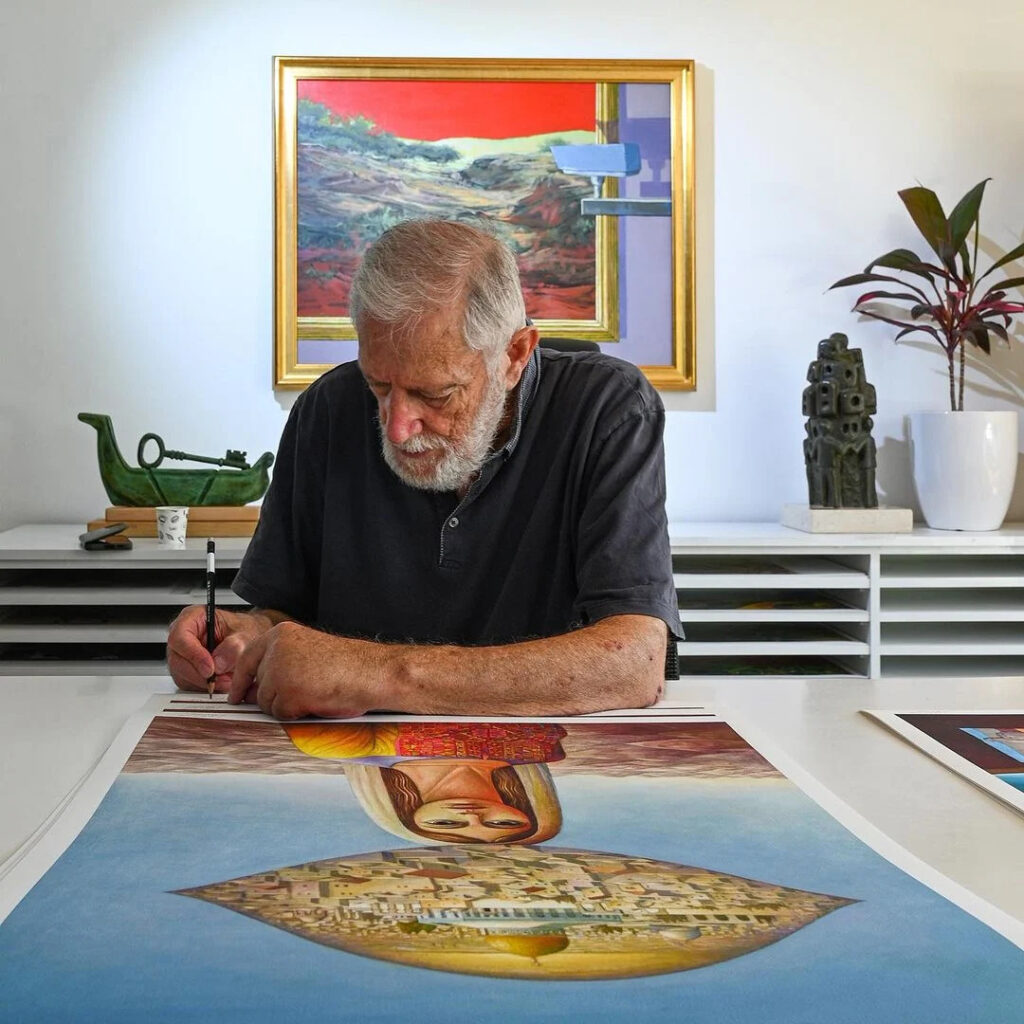
Palestinian artist Sliman Mansour, a central figure in contemporary Arab art whose work became synonymous with the struggle for Palestinian sovereignty, has died at the age of 79. The news was confirmed by his family, who wrote in a statement on Instagram: “With hearts heavier than words, we share that our beloved father has passed away. To the world, he leaves behind a life filled with beauty, memory, and a legacy that will continue to live through all those he touched. But for us, we lost a father, our source of love, strength, and home.” Mansour, born in Birzeit in 1947, was a founding member of the League of Palestinian Artists and co-founder of Gallery 79, the first art space in the West Bank, and devoted his life to building an artistic infrastructure for future generations of his people.
His death represents an irreparable loss for Palestinian art and the wider Arab cultural landscape, but his legacy, forged through resistance and creativity, will continue to inspire future generations.
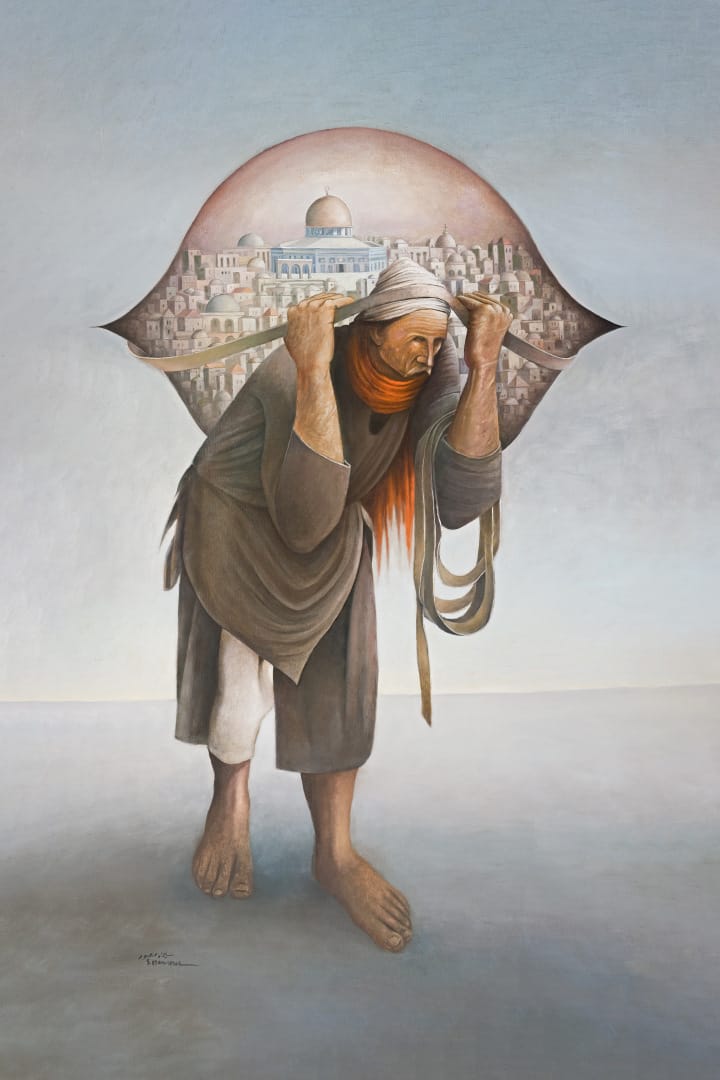
His work, marked by surrealism and epic emotion, became a vehicle for the dreams and testimonies of his people beyond the walls of Gaza and the West Bank. One of his most iconic works, The Camel of Hardships (1974), depicts an elderly Palestinian man carrying the city of Jerusalem on his back, with the golden dome of the Al-Aqsa Mosque at its centre.
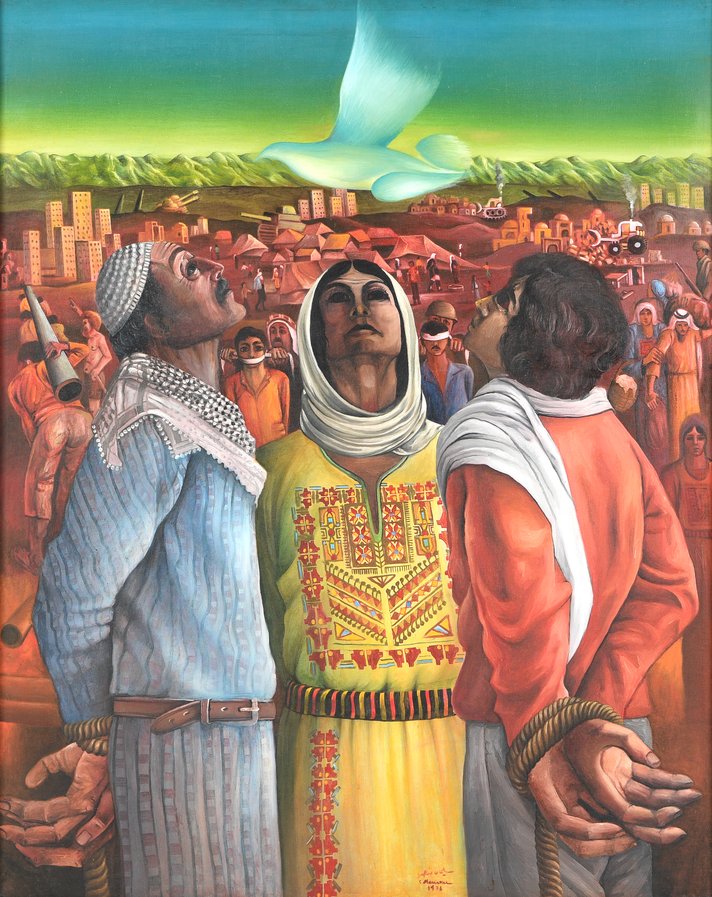
Other works, such as Perseverance and Hope, countered Western media representations of Palestine, depicting three Palestinians in a devastated refugee camp looking towards a dove. Mansour believed that art was not decoration for the wealthy, but rather “a social instrument.” “I believe I am on the right side of history and I am doing everything I can to show it,” he said in an interview. “Artists should be more active in their society.”
Art in Resistance and a Legacy in Palestine
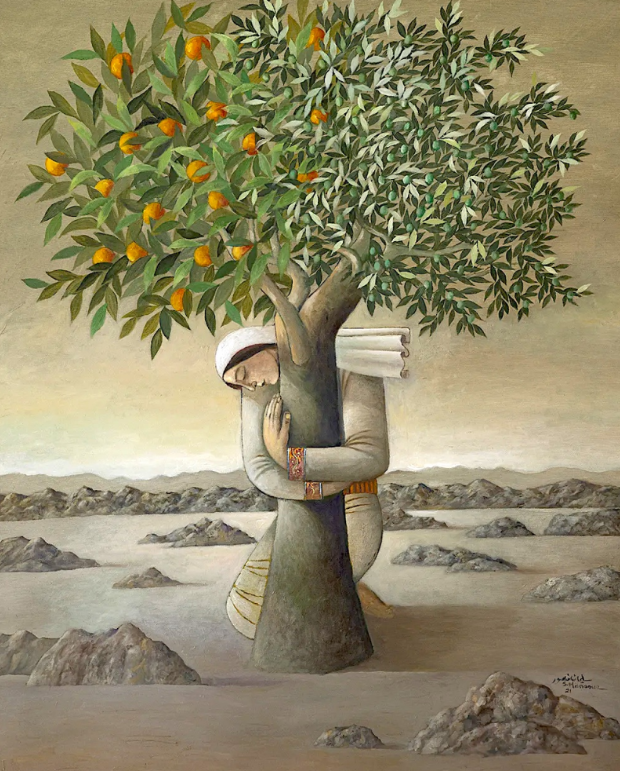
Mansour was one of the founders of the New Visions movement in 1989, during the First Intifada. The movement promoted the use of local materials instead of supplies imported from Israel and the West. Described as an “artistic precursor to the BDS movement,” it replaced oil and acrylic paints with olive oil, henna, tea, spices and coffee, while clay, animal glue and leather also became part of his artistic practice. Mansour adopted clay as a medium, seeing in the cracks of the material “something honest and powerful.” His legacy includes founding the Palestinian Association of Contemporary Art and the first international academy of fine arts in the Palestinian territories, which was later incorporated into Birzeit University. The Palestinian Museum praised him as a “beloved face of Palestine” and noted that his paintings “became one of the ways in which we preserve and imagine this country.”
The international art community has paid tribute to Mansour. Artist Emily Jacir, winner of the Golden Lion, wrote: “We lost a giant today. My friend, collaborator, mentor on this journey since we met 30 years ago.” Zawyeh Gallery, the first gallery dedicated to Palestinian artists, said that his “influence extended far beyond his own practice. As an artist, educator and mentor, he helped shape generations of Palestinian artists and played a pivotal role in the development of Palestinian visual culture.” The Sharjah Art Foundation and Mosaic Rooms in London also mourned his passing. Mansour, who was imprisoned several times for his activism and faced Israeli restrictions that included a ban on painting in the colours of the Palestinian flag — a measure that contributed to the emergence of the watermelon as a symbol of resistance — continued his artistic practice until the end of his life. He used his social media accounts to criticise what he described as Israel’s disproportionate response to Hamas’s self-defence attack on 7 October and to denounce the illegal occupation of Gaza and the ongoing genocide. His death represents an irreparable loss for Palestinian art and the wider Arab cultural landscape, but his legacy, forged through resistance and creativity, will continue to inspire future generations.
Source: Arte Informando
Cover image: © UNESCO