

Communications
FUNCI’s Commitment to the Archaeology of Castilla-La Mancha
Oct
The Islamic Culture Foundation (FUNCI), through the Centre for Studies on Islamic Toledo (CETI), is promoting and participating in four archaeological research projects aimed at recovering the memory and Andalusi heritage of the region.
The annual call for grants from the Government of Castilla-La Mancha (JCCM) for research into archaeological and palaeontological heritage has awarded funding to a total of 45 projects. FUNCI is co-financing and collaborating on four of them, with projects located in the provinces of Albacete, Cuenca and Toledo. These are: Haches Project: Archaeology of Historical Settlement in the Sierra de Alcaraz. Excavations at Los Cucos and Torre de Haches (Bogarra, Albacete), carried out in collaboration with the Bogarra Town Council; Geoarchaeology of Historical Quarrying and Rock-Cut Architecture in South-Eastern Alcarria. Phase II: Huete and Its Surroundings, with the Spanish Geological and Mining Institute (IGME-CSIC); Hydraulic Heritage and Landscape along the Banks of the Tagus. Toledo Seen through Its River. Phase III, 2026 (PaTo III), in collaboration with the University of Granada (UGR); and, finally, Arabic Inscriptions at the Santa Cruz Museum in Toledo: Study, Photogrammetric Documentation, Material and Epigraphic Cataloguing, with the School of Translators of Toledo (UCLM).
Over the coming months of 2026, FUNCI will continue promoting a range of initiatives focused on the study, preservation and dissemination of the cultural heritage of Castilla-La Mancha. With different objectives, methodologies and activities, these projects will highlight the value of a heritage closely connected to the presence and legacy of al-Andalus in the region, bringing it closer to the public and contributing to a better understanding of our history and culture.
Haches Project: Archaeology of Historical Settlement in the Sierra de Alcaraz. Excavations at Los Cucos and Torre de Haches (Bogarra, Albacete)
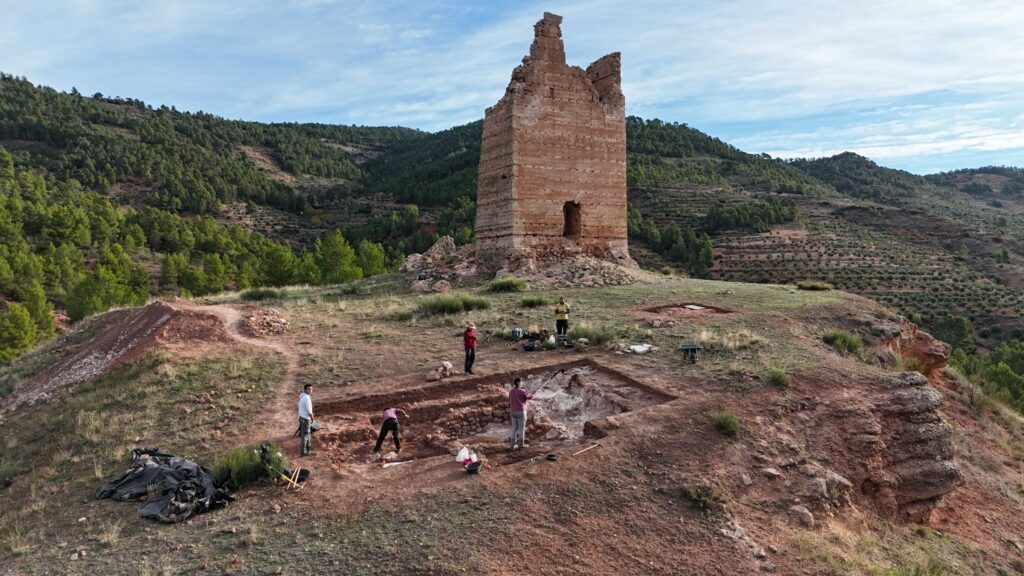
FUNCI joins this project this year, which marks a new phase of archaeological research in the Hoya de Haches (Bogarra, Albacete), focusing specifically on Torre de Haches and the Los Cucos archaeological site. Its objective is to understand the organisation of rural Andalusi settlement in the 12th and 13th centuries and its transformation following the Castilian conquest. The research, led by José María Moreno Narganes (Casa de Velázquez, EHEHI) and carried out in collaboration with CETI, examines the settlement sequence, defensive architecture, internal urban layout and economic activities of the site.
Over the coming months of 2026, the excavation of Test Pit 3 will be expanded to investigate domestic, storage and production areas. The enlargement of Test Pit 6 will also allow for a more detailed study of the main tower, with the aim of documenting its foundations, construction structures and the hydraulic system associated with the cistern. At Los Cucos, meanwhile, the project will seek to complete the characterisation of a recently identified monumental structure.
These initiatives will highlight the value of a heritage closely connected to the presence and legacy of al-Andalus in the region.
All of this work will be supported by archaeobotanical, archaeozoological, archaeometric and archaeometallurgical analyses, which will help reconstruct the region’s agricultural and livestock economy and the use of the valley’s natural resources.
In this regard, FUNCI, through CETI, remains committed to archaeological research in the province of Albacete, recognising the value of studies on rural settlements (Torre de Haches) and Andalusi farmsteads (alquerías) (La Graja, Higueruela), which provide information on historical forms of territorial organisation and management in the region.
Geoarchaeology of Historical Quarrying and Rock-Cut Architecture in South-Eastern Alcarria. Phase II: Huete and Its Surroundings
This project, launched in 2025, resumes the comprehensive study of historical quarries and rock-cut architecture in the south-eastern part of the Alcarria region in its second phase, focusing on the city of Huete and its surroundings, an area rich in historical stone quarries and rock-cut structures.
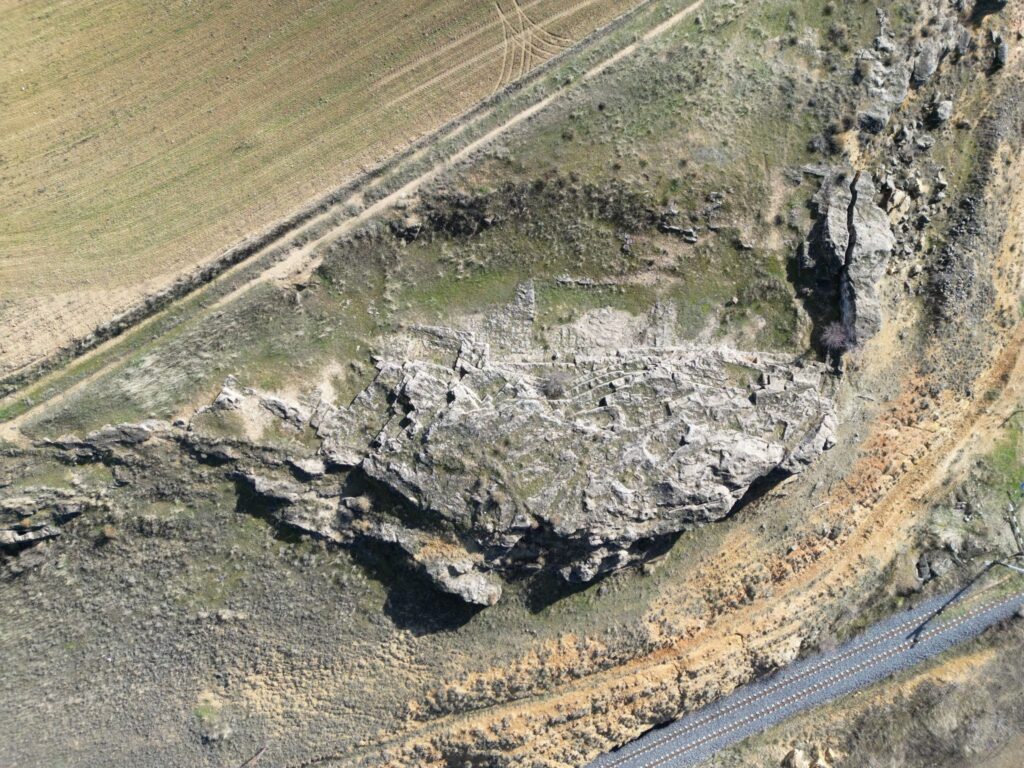
The project’s principal investigators — Enrique Álvarez Areces, from the Spanish Geological and Mining Institute (IGME-CSIC), and Sergio Isabel Ludeña, Scientific Coordinator of the Centre for Studies on Islamic Toledo (CETI-FUNCI) — will expand the identification and documentation of these elements of the cultural landscape through targeted archaeological surveys, documentary research and aerial photography analysis to locate new sites of interest.
In addition to documenting quarries and rock-cut structures using photogrammetry, drones and geographic information systems, this phase will incorporate geoarchaeological and petrological studies to characterise the rocks used in historical construction. Monumental buildings in Huete, including the alcazaba and the Andalusi city walls, will also be analysed, helping to establish the relationship between quarrying and local architecture.
The aim of these activities is to reconstruct the entire life cycle of the stone — from extraction to use in construction — and to establish the chronology and quarrying techniques employed. In some cases, these include techniques dating back to Antiquity that were revived during the Andalusi period and remained in use over time. This will contribute to a better understanding of the archaeological and landscape heritage of the Alcarria.
Hydraulic Heritage and Landscape along the Banks of the Tagus. Toledo Seen through Its River. Phase III, 2026 (PaTo III)
This project has already completed two previous phases, which advanced the study of hydraulic structures associated with the Tagus River. During the first phase (2024), the river course was surveyed from the Huerta del Rey to the San Martín Bridge. During the second phase (2025), the research continued through the Vega Baja, from the Baño de la Cava to the former Buenavista power station, identifying a total of 92 structures, including weirs, mills, waterwheels, irrigation channels, aqueducts and power stations. The team, led by José María Civantos (University of Granada), also carried out a more detailed archaeological study of the Juanelo Turriano waterworks and its surroundings, presenting the results at various conferences and scientific outreach initiatives.
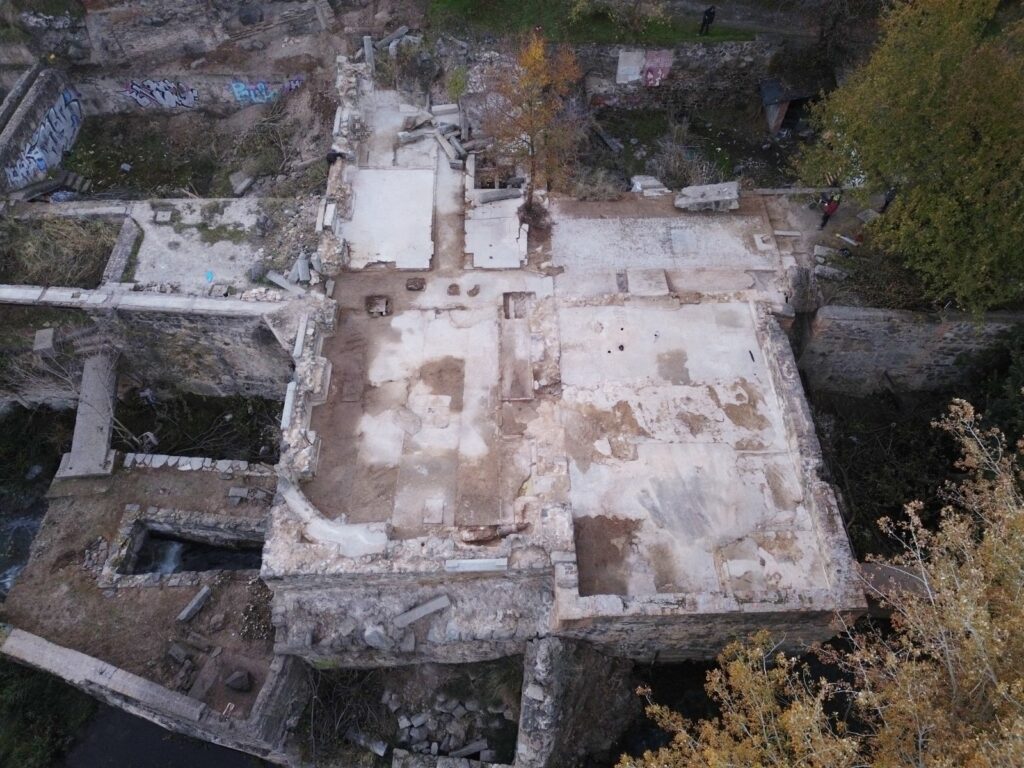
During this third phase, the team will continue identifying hydraulic structures in the river environment, as well as carrying out archaeological research on the Juanelo Turriano waterworks. The project will apply landscape archaeology, hydraulic archaeology and architectural archaeology methodologies, using GIS, drones, photogrammetry and 3D modelling. The aim is to develop a better historical understanding of Toledo, while also creating heritage management tools and proposals for the preservation and promotion of the sites.
In 2026, the project will also investigate historical irrigated areas around La Peraleda and the Arroyo de la Rosa, areas currently threatened by urban development.
The research includes scientific outreach initiatives, student training and the publication of results in specialised academic journals.
In this regard, FUNCI shares with the Biocultural Archaeology Laboratory (MEMOLab), at the University of Granada, an interest in studying water not only as a resource, but also as a means of social organisation in the past and into the present.
Arabic Inscriptions at the Santa Cruz Museum in Toledo: Study, Photogrammetric Documentation, Material and Epigraphic Cataloguing
This project aims to conduct a comprehensive study of the collection of Arabic inscriptions preserved at the Santa Cruz Museum in Toledo — including its satellite sites — comprising numerous pieces from different periods, made of different materials and belonging to different typologies. The research, led by Ignacio Sánchez (School of Translators of Toledo) and Sergio Isabel Ludeña (CETI-FUNCI), seeks to identify, document and catalogue these elements of material culture held in the museum’s collections or incorporated into its buildings. For various reasons, many of these pieces have been insufficiently studied or remain unpublished.
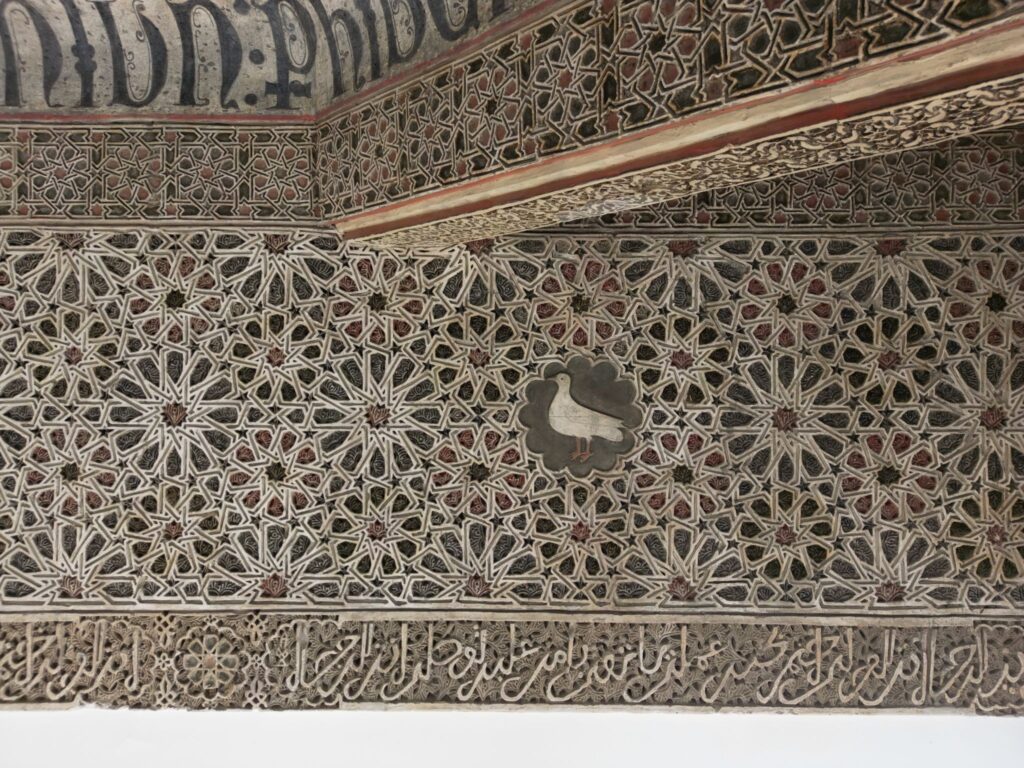
The study will examine both the material characteristics and the textual and palaeographic content of the inscriptions, with the aim of contributing to a better understanding of Toledo’s medieval history and its writing traditions.
The project will employ advanced digital documentation techniques, including 3D photogrammetry, Reflectance Transformation Imaging (RTI) and multispectral imaging to improve the reading of deteriorated inscriptions. The materials used as supports will also be characterised through non-invasive methods, including digital microscopy and pXRF analysis. All the information will be integrated into a relational database developed with NodeGoat, allowing the support material, chronology, epigraphic content and formal characteristics to be cross-referenced.
The project’s main outcome will be an online, fully documented catalogue, together with proposals for preventive conservation and improvements to the museographic interpretation of the pieces.
Ultimately, this project brings together a shared vision between the School of Translators of Toledo and the Centre for Studies on Islamic Toledo: to transform the Santa Cruz Museum’s collection of Arabic epigraphy into a scientific and heritage reference point for the study of medieval Toledo.
Este artículo está disponible en español.