

Communications
Museum Night in Toledo: activities to discover our Islamic heritage
Jun
To mark the first edition of Museum Night in Toledo and International Museum Day, the Centre for Studies on Islamic Toledo (Islamic Culture Foundation) organised a number of events throughout May with the aim of showcasing FUNCI’s new premises in the city and, in doing so, raising awareness of Toledo’s Islamic heritage.
Short guided tours of the Andalusi palace (Calle Soledad, 2)
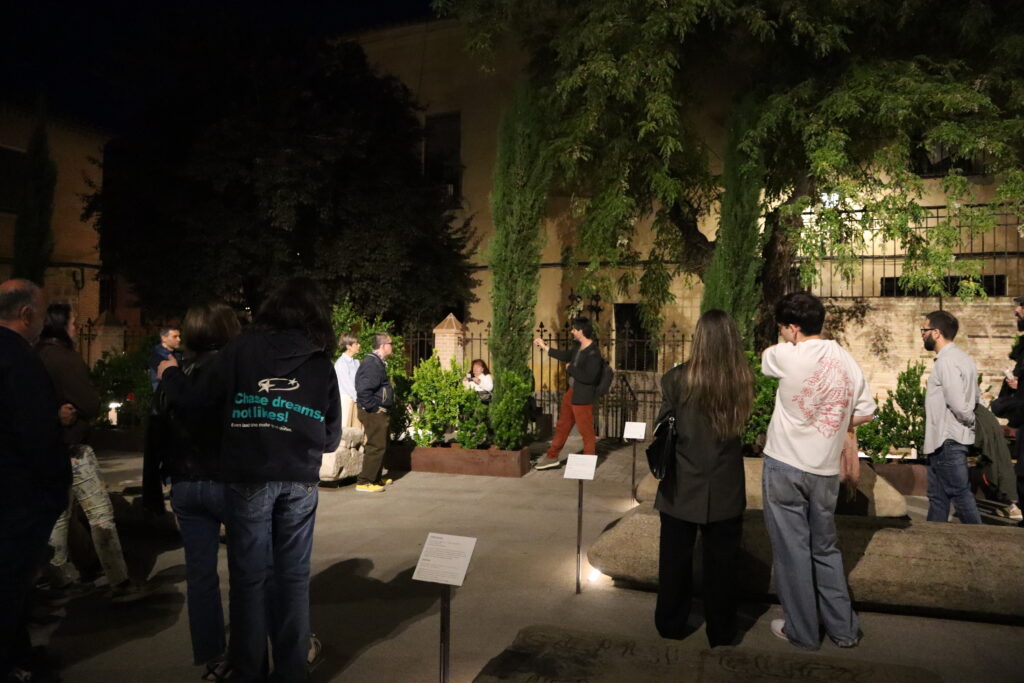
On Saturday 16th, the doors of the Andalusi palace at Calle Soledad, 2, popularly known as the ‘Casa del Temple’, were opened for guided tours. It was the first time it had been opened to the public since the property was purchased by the Ministry of Culture in 2023 and subsequently granted to the Islamic Culture Foundation —registered with the Ministry of Culture’s Protectorate of Cultural Foundations— at the end of 2025.
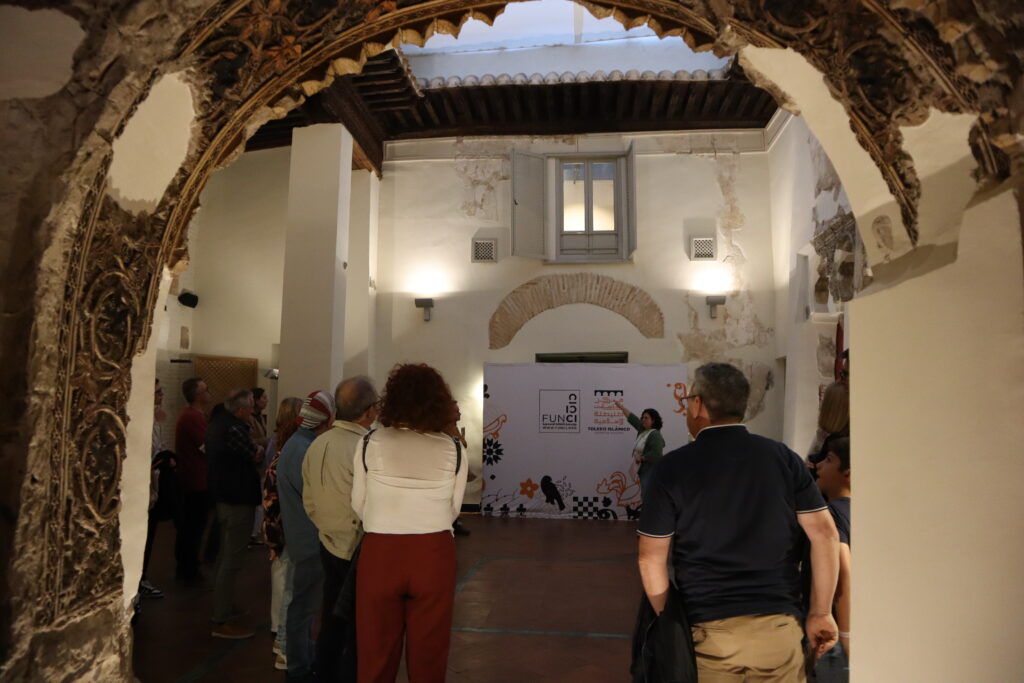
Throughout the evening, there were a series of half-hour guided tours during which FUNCI’s technical staff, specialising in Islamic heritage, shared with the public the known facts about the building’s history, as well as its spatial development over the centuries, the progress of the research being carried out by the centre, and the initiatives the Foundation plans to undertake in the future, including its forthcoming permanent opening. In total, more than 200 people took part in this event, and it is hoped that more visitors will soon be able to enjoy the space.
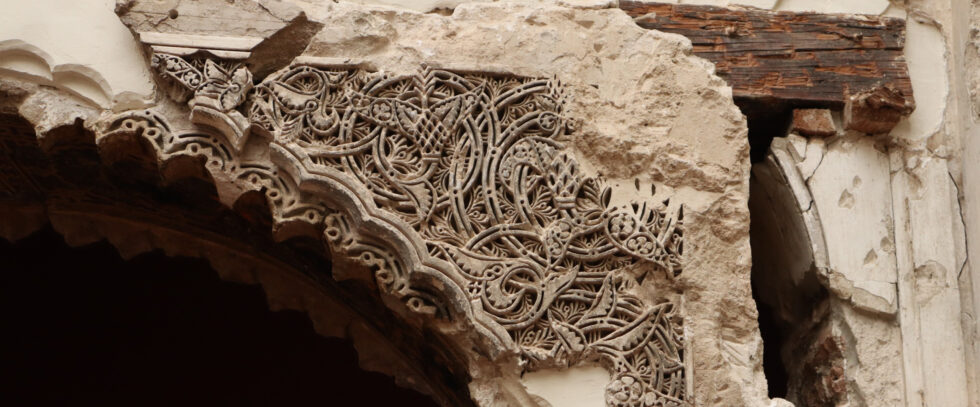
The structure we see today dates largely from the medieval period. The palace-house rests on a series of vaults and partially cuts across an earlier hall, dating from the Caliphate or Taifa period—whose orientation does not correspond to the layout of the building. This hall was decorated with red ochre paintings, depicting geometric motifs, and polychrome plasterwork. On the upper floor, one can see how a courtyard house was also constructed in the Middle Ages and decorated with interlacing patterns and arabesques (geometric and plant motifs) in the Al-Andalus tradition. However, over the centuries it continued to be transformed and partitioned, eventually becoming a tenement block with multiple dwellings. Finally, in the 1990s, the property was purchased by a private individual and, until its acquisition by the Ministry of Culture in 2023, various restoration works were carried out.
The Al-Andalus botanical legacy in Toledo’s museums
In addition, on the same day, two guided tours were held simultaneously of the Al-Andalus botanical trails, which are permanently on display at the Santa Cruz Museum and the Sephardic Museum in Toledo. These tours aim to transport participants back to the Al-Andalus era and convey its impact on our culture and landscape; more specifically, to highlight the advances made in the fields of agronomy and botany on the Iberian Peninsula during the years of Islamic presence.
Furthermore, archaeology and documentary sources are essential to our understanding of these disciplines. It is through them that we learn of the work of prominent agronomists from Toledo such as Ibn Wāfid and Ibn Baṣṣāl, whose works, along with their enduring influence, made a decisive contribution to the preservation, transmission and development of the natural and medical sciences.
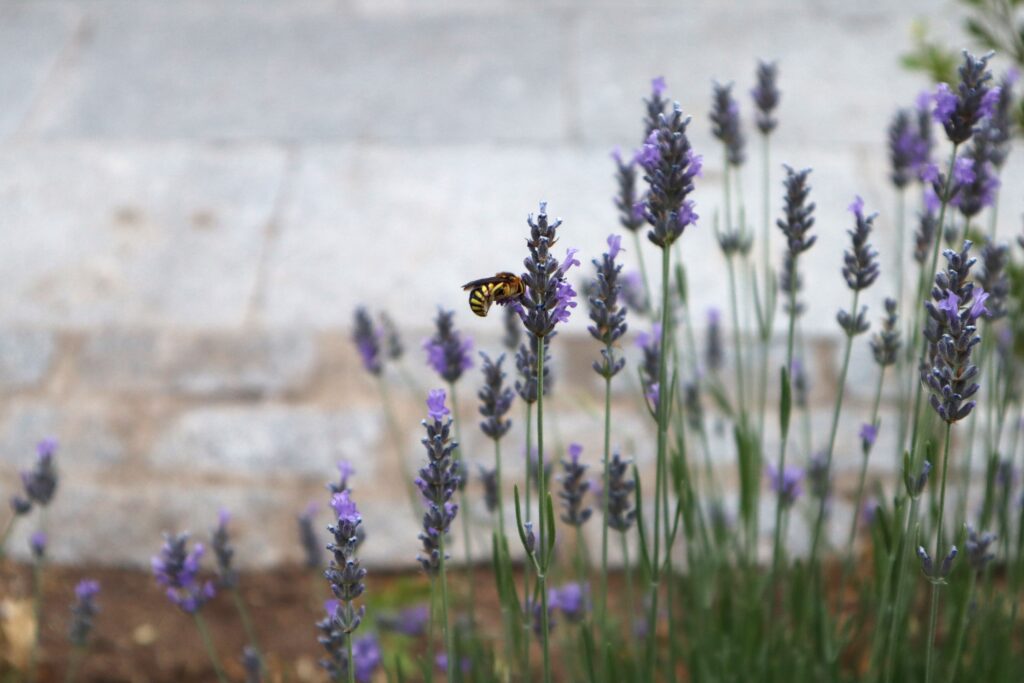
On the one hand, the exhibition at the Santa Cruz Museum focuses on the development and experimentation within the field of agriculture. Its main aim is to highlight the connection between the scientific knowledge of the past and the landscapes, crops and plant products that still form part of our environment and daily lives.
On the other hand, the exhibition at the Sephardic Museum establishes a dialogue between the Jewish communities of al-Andalus and the knowledge of the plant kingdom compiled and generated during that period. The exhibition highlights how certain species formed part of the cultural and religious life of the inhabitants of Sefarad; for example, the Jewish festive cycle cannot be understood without the symbolism of certain plants. Furthermore, medical disciplines, linked to Arabic sources, were one of the avenues through which Iberian Jewish communities gained recognition.
An evening to immerse yourself in the city’s medieval past and discover the Islamic influences that still endure in its urban layout, architecture and natural heritage.
Guided tours have proven to be an effective way of bringing the public closer to the contribution made by the Al-Andalus people to our culture, our science and our landscape. Participants had the opportunity not only to visit a monument—the Al-Andalus palace on Calle Soledad, 2—but also to engage with its history and heritage, taking ownership of it and championing it as a shared asset for the collective enjoyment of all.
The future headquarters of the Islamic Culture Foundation in Toledo, which will house the Centre for Studies on Islamic Toledo, aims to become a leading venue, open to visitors of all backgrounds, as well as a centre for research and outreach dedicated to the study and deeper understanding of the Islamic legacy which, over eight centuries, profoundly transformed the region in many areas.
Este artículo está disponible en español.