

Communications
New Exhibition: Ancient words, present dialogues. From medieval Toledo to the present day
Jun
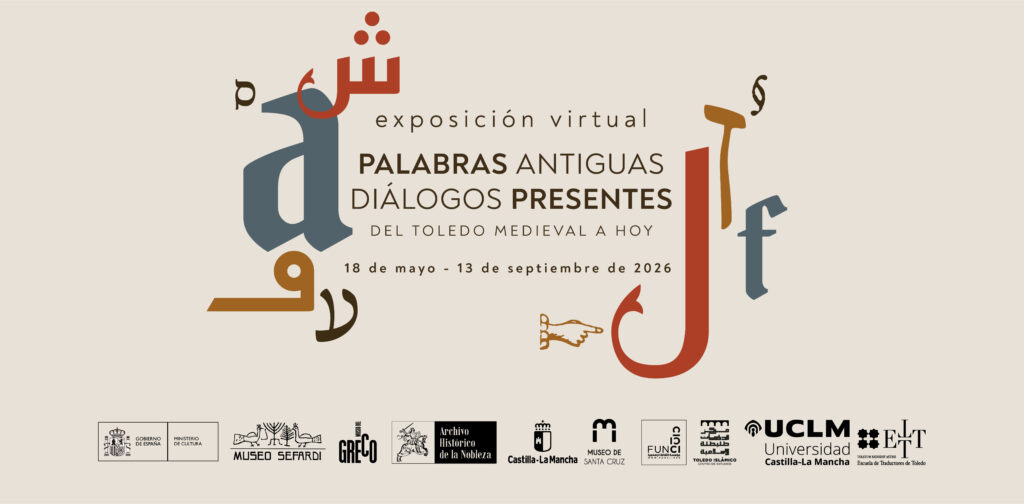
On the occasion of International Museum Day (May 18), the inauguration of the virtual exhibition Ancient words, present dialogues. From medieval Toledo to the present day was celebrated. This exhibition constitutes a collective project orchestrated together with the Sephardic Museum, the Greco Museum, the Historical Archive of the Nobility, the Santa Cruz Museum, the Toledo School of Translators (University of Castilla-La Mancha) and the Center for Studies on Islamic Toledo (Islamic Culture Foundation). The exhibition will be available until June 30, 2026 (extended until 13 September 2026).
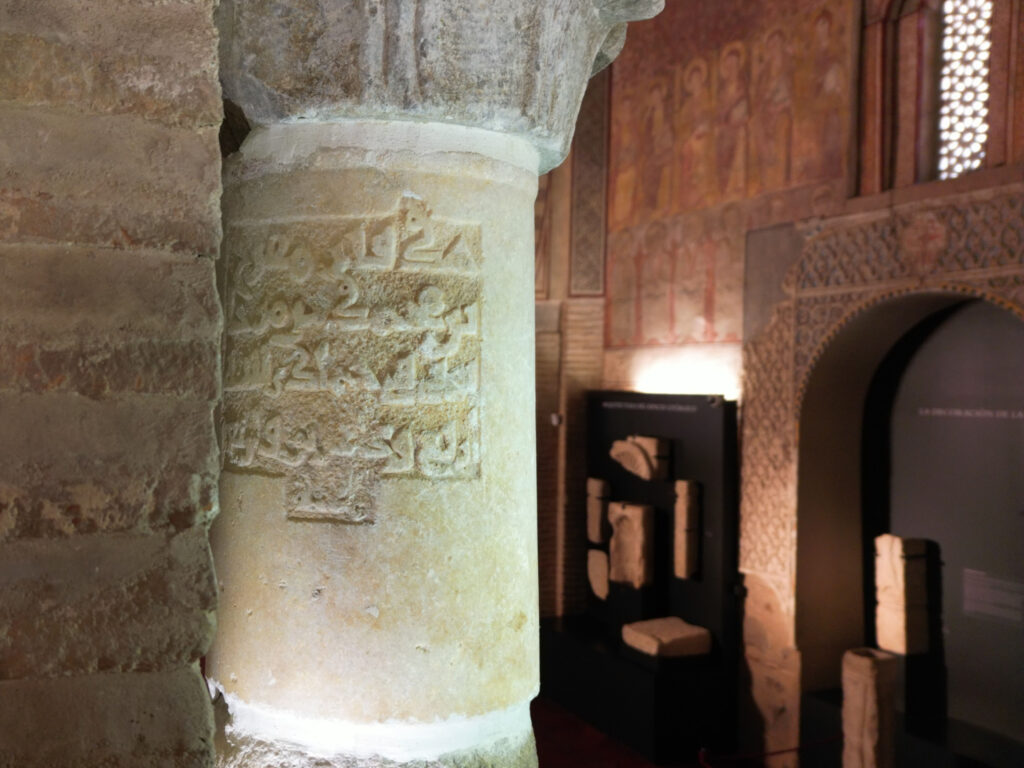
This exhibition gathers a selection of elements, linked to the Islamic legacy and its survivals, which are found in different spaces of relevance in the city. The information about these goods can be consulted online and, at the same time, the headquarters of the participating bodies can be visited. Among the selection we find the inscriptions of the prayer hall of the Tránsito synagogue (Sephardic Museum) or the cippus of Mufarriǧ of the church of San Román (Museum of the Councils and Visigothic Culture – Santa Cruz Museum).
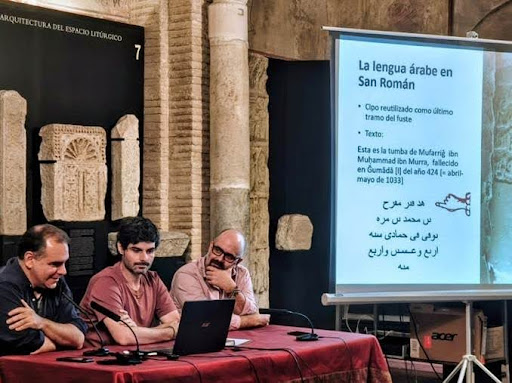
As a complementary activity, during the months that the exhibition lasts, a series of thematic lectures have been scheduled that address questions related to the chosen elements. For this, we have had the participation of leading researchers in their field; among others: Ignacio Sánchez (Toledo School of Translators), Sergio Isabel Ludeña (Islamic Culture Foundation), Daniel Muñoz Garrido (University of Granada), Elisabeth Menor Natal (Complutense University of Madrid) and Javier Mingo García (architect and conservator specialized in “armar lo blanco” joinery / white carpentry).
In short, May has been a prolific month that announces and showcases the spirit of the CETI: the promotion of research and the disclosure of Islamic heritage as a means for the improvement of intercultural coexistence and economic, cultural, and social development in the area, thanks to citizen participation. All of this could not be carried out without the action of local agents and the collaboration among all of them. Precisely, this action seeks to create a network at the local level for the enhancement of this legacy and the construction of a kinder future.
Este artículo está disponible en Español.