


Articles
International day of Islamic art. Six artists you should know
Dec
Article theme: Art, Arte, Calligraphy.
The international day of Islamic art, celebrated annually on 18 November, invites us to reflect on the richness of a cultural heritage that spans centuries and continents. Islamic art encompasses architecture, calligraphy, textiles, ceramics, mosaics, gardens and other, integrating religious devotion with scientific knowledge, philosophical ideas and aesthetic sophistication.
Far from static, Islamic art evolves through contemporary creators who reinterpret its motifs to address modern themes such as identity, migration, gender and coexistence, among others. The work of six contemporary artists is presented in this article, each of them offering a unique reflection on how Islamic art can be reimagined today.
Faig Ahmed
Faig Ahmed is an Azerbaijani contemporary artist known for transforming one of the most emblematic symbols of Eastern craft, the traditional carpet, into groundbreaking works of art. Born in 1982 in Sumqayit and trained as a sculptor, Ahmed has developed an artistic language that bridges ancient textile traditions with the aesthetics of the digital age.
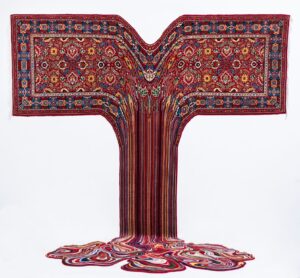
Ahmed’s work captivates the viewer through the unexpected fusion of traditional craftsmanship, rich in cultural and historical memory, with hyper-contemporary and digitally distorted imagery. His carpets appear pixelated, stretched, melted or glitched, as if a digital error were infiltrating the structure of a handmade object. What makes his practice particularly striking is that this tension between traditional process and futuristic design invites viewers to reconsider the boundaries of craft and heritage, proposing tradition as a dynamic, ever-evolving field rather than a fixed cultural artifact.
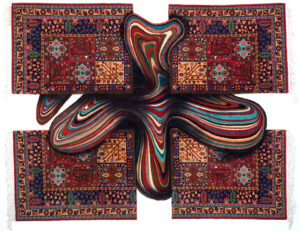
“These carpets are woven solely by women who pass this tradition from mothers to daughters. As part of visual culture, the carpet has changed under the influence of other cultures, religions and even languages. It is a metaphor for the immutability within the changes of an object.” — Interview for Metal Magazine.
Monir Shahroudy Farmanfarmaian
Monir Shahroudy Farmanfarmaian was a pioneering Iranian artist whose practice forged a powerful dialogue between Persian artistic heritage and modern abstraction. She was born in Qazvin in 1922 and devoted her working life to developing an approach that is based on Islamic aesthetics while being boldly contemporary in form and concept.
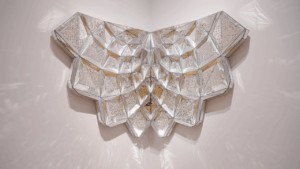
Monir’s mirror-mosaic sculptures and reverse-glass paintings are grounded in the principles of Islamic geometry. Through monumental wall panels and independent sculptural works, she fused meticulous craftsmanship with a modern sensibility, creating compositions that use the interplay of surface texture, light, reflection, color, and form to transformative effect. Countless fragments of mirror and glass are assembled into radiant, interlocking patterns that refract space and animate the viewer’s perception, turning abstraction into a luminous, spatial experience.
“I was inspired by the geometry I found in ancient mosques, with their tiles, metals, woods and stuccoes.” — Monir Farmanfarmaian in conversation with Lauren Oneil Butler, Art Forum, 2015
She revived traditional techniques such as āina-kāri, she reimagined them as vehicles for conceptual exploration, linking geometry to cosmology, spirituality and the architecture of sacred spaces. Her works transcend decoration: they become meditations on infinity, perception, and the cultural memory embedded in materials.

Lalla Essaydi
Lalla Essaydi is a Moroccan artist born in Marrakech in 1956, who has lived between Morocco, Saudi Arabia, Paris and the United States. Trained in painting and photography, she creates highly staged works that explore the intersections of gender, culture and representation within the Arab world. Her practice draws on her own biography, allowing her to challenge and reframe dominant narratives from an intimate and critical standpoint.
“In my art, I wish to present myself through multiple perspectives: as an artist, as a Moroccan, as a traditionalist, as a liberal, as a Muslim. In short, I invite viewers to resist stereotypes.”
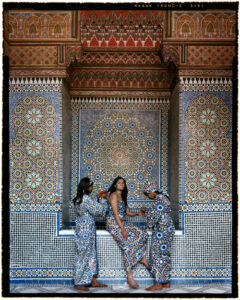
Essaydi’s work often consists of meticulously staged photographs, paintings and installations in which female subjects confront and invert stereotypical representations rooted in Orientalist fantasies. A central motif is her use of Arabic calligraphy written in henna, a practice traditionally associated with women, applied onto bodies, fabrics and domestic spaces to challenge the notion that calligraphy belongs exclusively to men.
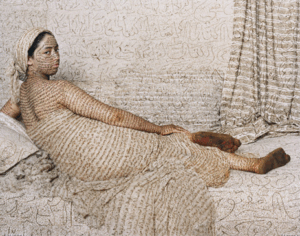
Through series such as Converging Territories, Harem and Les Femmes du Maroc, Essaydi revisits and subverts the imagery of harems, odalisques and veiled women that have long populated Western painting. Instead of passive subjects of exotic fantasies, her women claim space, agency and identity. By merging personal memory, cultural tradition and contemporary gender critique, Essaydi creates a powerful visual language that reimagines what it means to be a Muslim woman today, resisting stereotypes and giving voice to complexity, dignity and self-definition.
Helen Zughaib
Helen Zughaib is a Lebanese-American artist born in Beirut. She works primarily in gouache and ink, developing a vivid, graphic style that draws from the visual languages of Arab decorative arts, folk traditions and modern illustration. Her personal history of displacement and cultural hybridity shapes a practice grounded in themes of migration, identity and belonging.
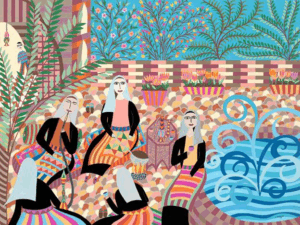
Zughaib’s work often uses bold color, pattern and stylized forms to depict scenes of daily life, family histories and sociopolitical realities of the Middle East. While her compositions can appear playful or decorative at first glance, they frequently carry deeper narratives about war, exile and resilience.

Through series such as Arab Spring, Refugee Family and Stories My Father Told Me, Zughaib explores the impact of conflict and displacement on ordinary people, especially women and families. Her art seeks to foster empathy, challenge stereotypes and bridge cultural divides by presenting Middle Eastern identity in ways that emphasize humanity and connection. In doing so, she positions her work as a form of cultural diplomacy, an invitation to see beyond political narratives and to recognize the shared emotions that bind communities across borders.
“I ask the viewer to see through the eyes of another person, to put themselves in the other’s shoes. To accept the ‘other.’ To reject division. To promote acceptance and understanding, and to reject violence and the subjugation of any person anywhere.”
El Seed
eL Seed is a French-Tunisian artist born in Paris in 1981, whose work blends the traditions of Arabic calligraphy with the visual language of contemporary graffiti. He is internationally recognized for his monumental public artworks, which span buildings, bridges, rooftops and urban landscapes across the world.
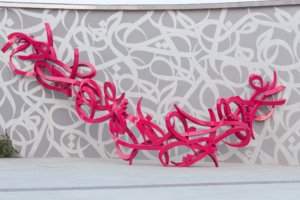
Working in what he calls calligraffiti, eL Seed transforms Arabic letters into dynamic, flowing compositions that merge text and abstraction. His murals often feature poetic verses, philosophical reflections or lines from well-known writers. The intertwined forms, sweeping curves and rhythmic structures invite viewers to experience the emotional and aesthetic power of Arabic script as a universal visual language.
“Anyone who wants to see the sunlight clearly must first clean their eyes.”
Many of eL Seed’s projects address themes of identity, community and social connection. His large-scale mural Perception in Cairo, painted across nearly 50 buildings, sought to challenge stereotypes about the marginalized community of Manshiyat Nasr, revealing a hidden beauty when seen from a single vantage point.
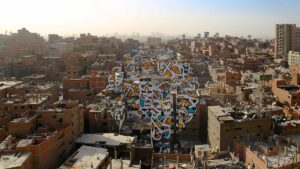
Whether creating murals in Tunis, Paris, Dubai or Rio de Janeiro, eL Seed approaches each context with the intention of fostering dialogue, honoring local narratives and using calligraphic forms as a bridge between people. Through this process, his work becomes not only a celebration of cultural heritage but also an invitation to reconsider the social boundaries and assumptions that structure our environments.
Hamra Abbas
Hamra Abbas, born in Kuwait in 1976 is a multidisciplinary artist whose practice spans sculpture, painting, photography, installation, stone inlay and more. Abbas draws on her diverse cultural and geographic experiences, living between Pakistan, Europe and the United States, to develop a plural, global‑sensitive artistic vision.
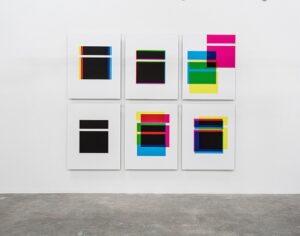
Her work frequently reinterprets traditional forms and iconography, religious, decorative, architectural, by displacing them into new contexts and materials. For example, in series such as Kaaba Picture as a Misprint, she plays with the representation of the sacred cube of the Kaaba by layering the three primary printing colours (cyan, magenta, yellow) to recreate black, questioning notions of religious imagery, memory and identity.
More recently, Abbas has turned to the ancient technique of marble inlay (pietra dura), using marble, semi‑precious stones (especially lapis lazuli), granite, serpentine and other minerals to produce sculptural “gardens,” landscapes and organic motifs that refer to Paradise, nature and spiritual symbolism, as in her large‑scale work Garden (2021).
“I reimagined it in my marble sculptures and titled them ‘Gardens of Paradise.’ For me, these places represented an imaginary threshold between desire and devotion through the image of a garden.” — Interview for Forbes
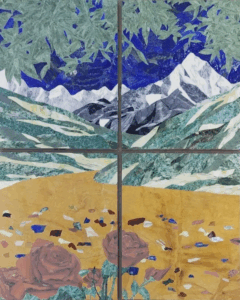
Through this interplay of tradition and innovation, Abbas challenges conventions of cultural ownership, ornamentation, devotion and memory. Her reimagined gardens, sacred symbols and reworked iconography invite reflections on spirituality, identity, ecological awareness and our relationship to heritage. In doing so, she builds new platforms from which to question how images and materials rooted in history can be transformed into powerful contemporary languages of meaning and belonging.
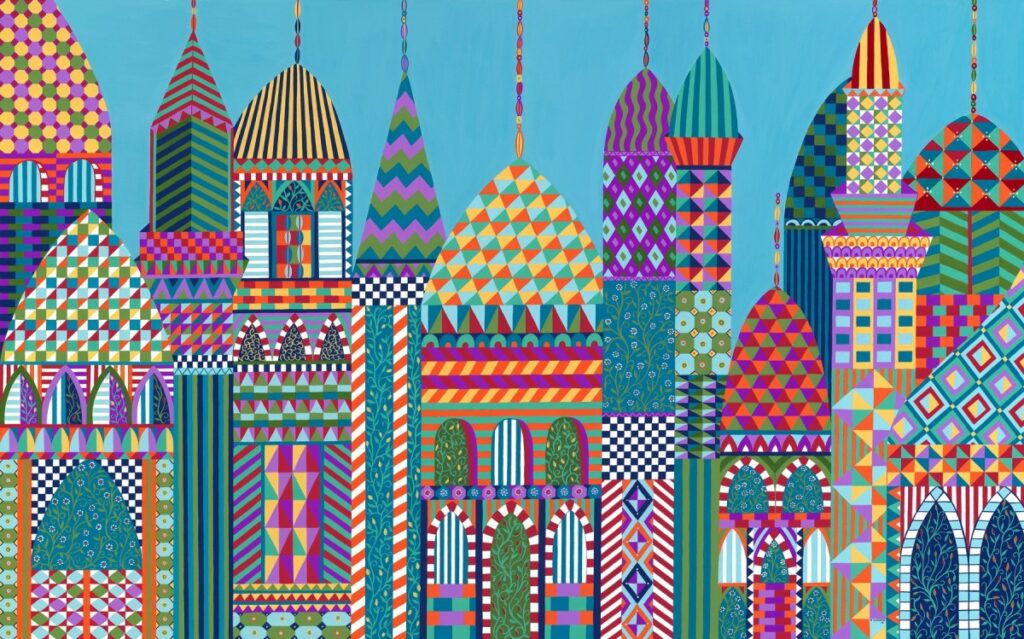
Cover image: Re Imagined Peace, Helen Zughaib.
External links
Faig Ahmed: faigahmed.com | @faigahmedstudio
Monir Shahroudy Farmanfarmaian: monirff.com
Lalla Essaydi: lallaessaydi.com | @lallaessaydi
Helen Zughaib: hzughaib.com | @hzughaib
El Seed: elseed-art.com | @elseed
Hamra Abbas: hamraabbas.info | @hamra_abbas