


Communications
The National Archaeological Museum and the Islamic Culture Foundation present an exhibition on the material and botanical heritage of Al-Andalus
Jun
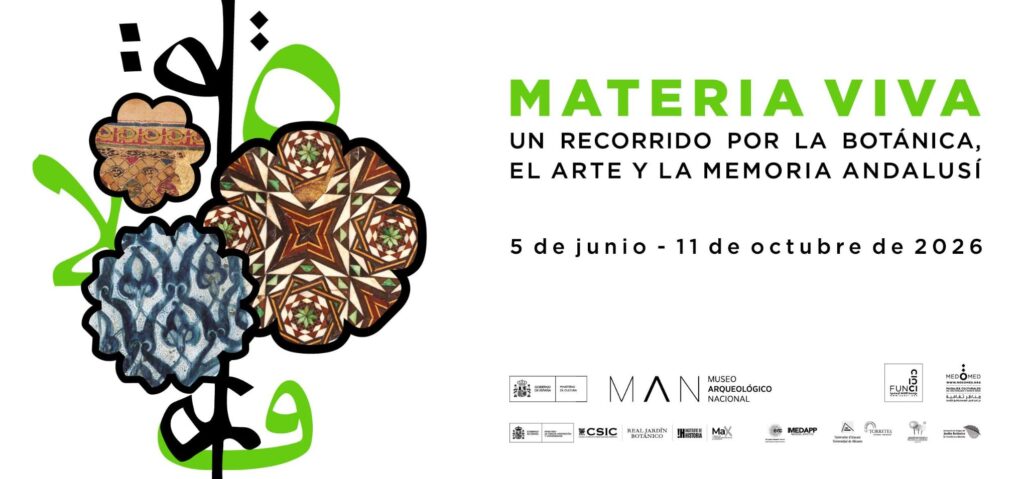
Last Friday, 5 June, we opened the exhibition Living Matter. A Tour of the Botany, Art and Memory of al-Andalus at the National Archaeological Museum of Madrid.
This exhibition, which will run from 11 June to 11 October, invites visitors to explore the relationships that may have existed between nature and human communities in al-Andalus. It consists of a dual itinerary that winds its way through the garden’s plant species and a selection of pieces from the museum’s collections, thereby establishing a connection between the various uses of plants and the objects associated with them, as well as the spaces where they were located. In this way, it offers a broader perspective on how Islamic cultural heritage contributed to the development of a unique interaction between the communities of medieval Iberian Paeninsula and their environment.
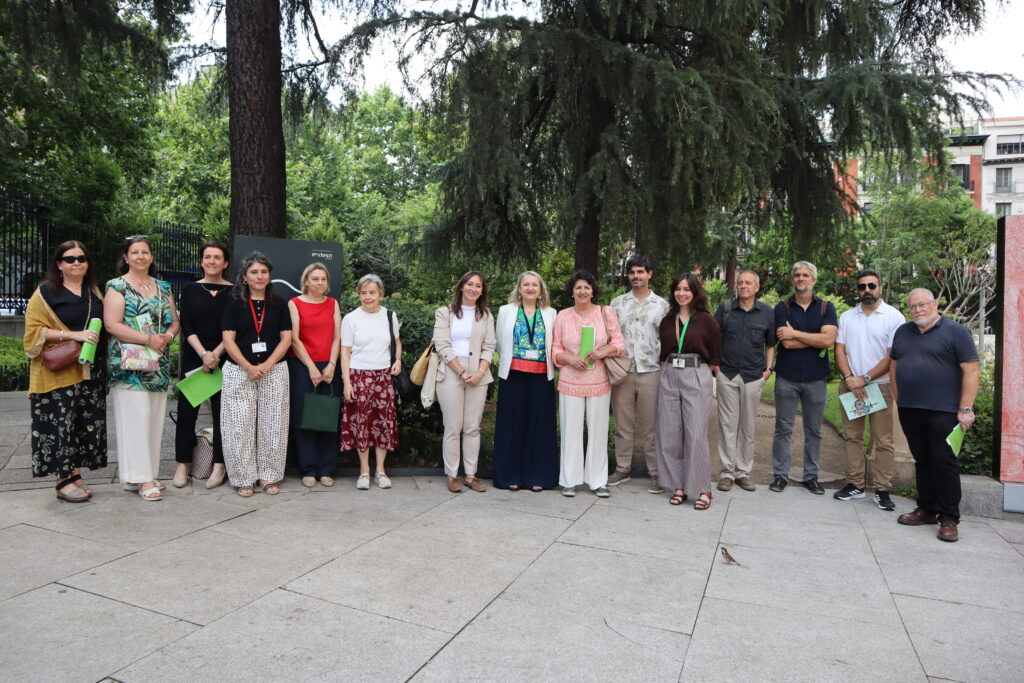
At the opening ceremony, following remarks by Isabel Izquierdo, Director of the National Archaeological Museum (MAN), and Mercedes Corujo, Treasurer of the Islamic Culture Foundation (FUNCI), two guided tours were held of the garden and galleries 23 and 26 of the collection, led by the technical coordinators of the exhibition from each institution, Helena Lahoz Kopiske (MAN) and Sergio Isabel Ludeña (FUNCI).
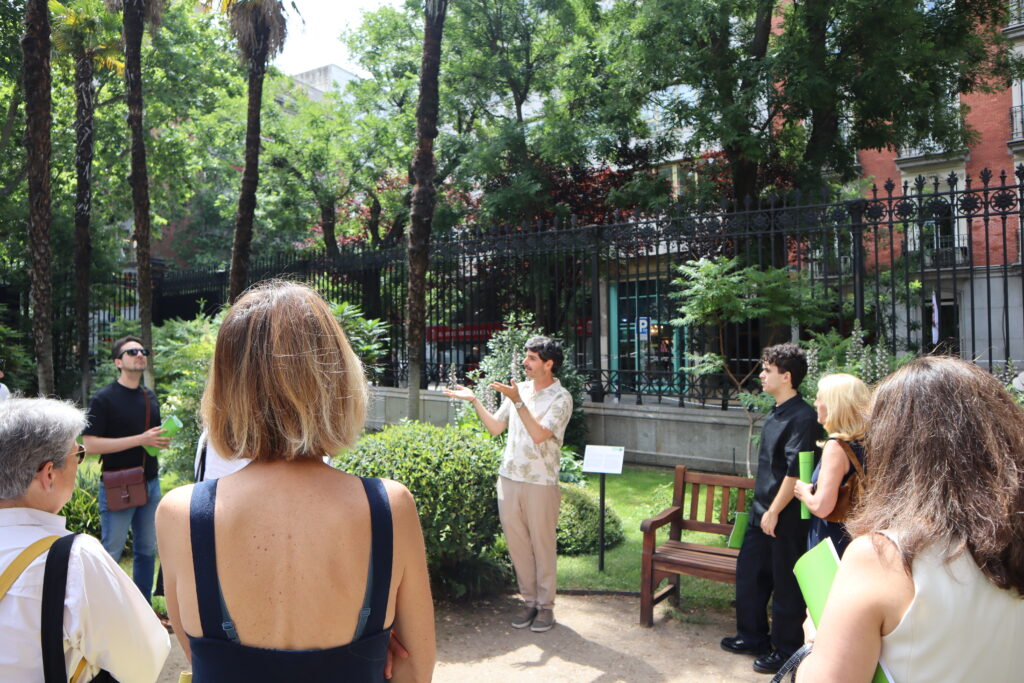
In the historic garden, signs have been placed next to both existing plant species and others that have been planted in this area. There are a total of twelve plants, which were either introduced to the Iberian Peninsula during the Al-Andalus period, or were cultivated in this region due to their known uses or properties. The tour highlighted in particular citrus fruits, such as lemon and bitter orange trees, whose fruits had medicinal, hygienic and culinary uses; Sicilian sumac, used for dyeing and tanning thanks to its high tannin content; the Myrtus communis L. subsp. baetica, a subspecies of the common myrtle that is currently being reintroduced after centuries of displacement by other Mediterranean varieties; and the various taxa of medieval roses identified by a citizen science project coordinated by the Association of Friends of the Botanical Garden of Castilla-La Mancha.
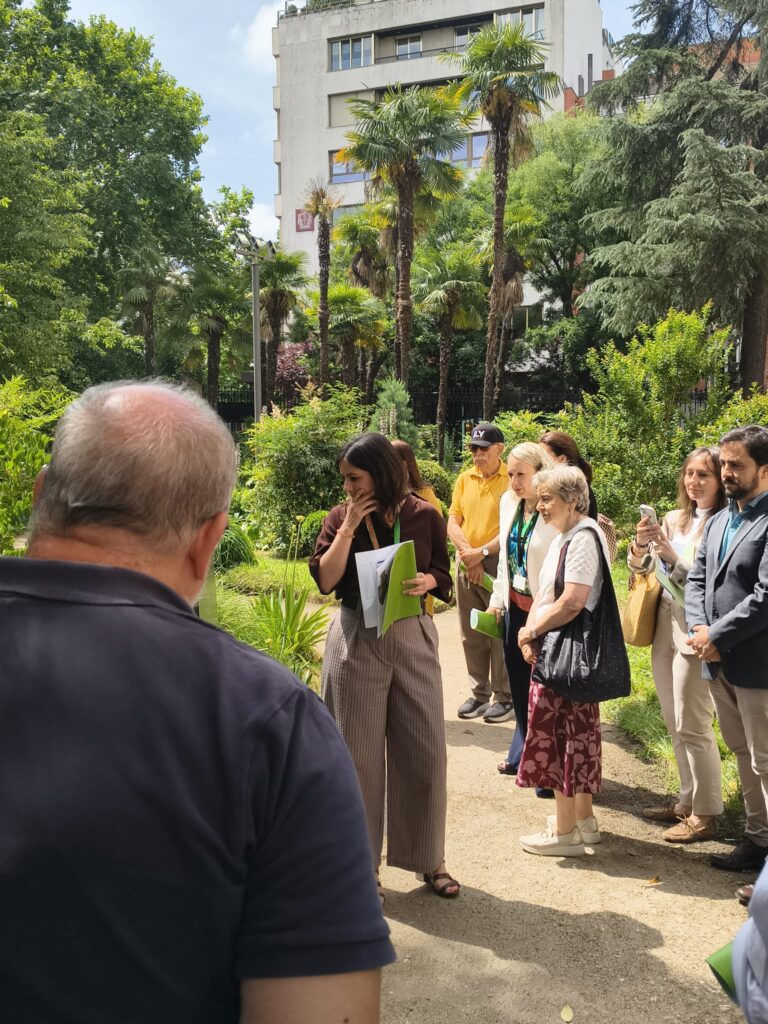
In exhibition rooms 23 and 26 of the museum, dedicated to al-Andalus, a number of exhibits have been highlighted to illustrate the significance that Andalusi botany attained in various respects. Some examples highlighted during the visit included the fountain spout in the shape of a fawn—from Madīnat al-Zahrā’—as an example of the exuberance of the palace gardens; an inkwell that may have contained plant-based inks and which relates to the importance of calligraphy in the Islamic world; a mortar, essential in the preparation of recipes for food, medicine and perfumery; fragments of wooden beams with plant decorations – originally from the mosque in Córdoba – which translate the botanical world into the materiality of architecture; the Hornos vase—from the Alhambra—which may have contained scented waters; and the dome of the palace of Gutierre de Cárdenas and Teresa Enríquez de Torrijos, an example of the continuity of Al-Andalus art and its plant motifs, beyond the Castilian conquest.
This project has been made possible by interdisciplinary research, advances in archaeobotany and citizen science initiatives. As a result, it is now possible to recover local plant species that were replaced by other varieties. Arabic written sources have also been analysed, providing information on the study of these species by Andalusian agronomists and their most common uses, as well as artefacts preserved in the museum that complete a complex picture of the cultural landscape of al-Andalus, which remains alive today.
The exhibition will be open until 11 October and will feature a varied programme of activities: a panel discussion with experts, a scientific symposium, guided tours and various workshops.
We would like to thank all the individuals and organisations that have collaborated on this joint project with FUNCI: the National Archaeological Museum (Ministry of Culture), the Royal Botanical Garden (RJB-CSIC), the Institute of History (IH-CSIC), the Medieval Appetites project: plant foods in multicultural Iberia (600–1100 AD) (European Research Council, Brussels, BE), GRANT_NUMBER: ERC-2021-AdG 101054883), Torretes Biological Station (University of Alicante), Botanical Garden of Castilla-La Mancha, Association of Friends of the Botanical Garden of Castilla-La Mancha.