



Articles
Maryam Touzani’s movies: a portrayal of Moroccan society
Apr
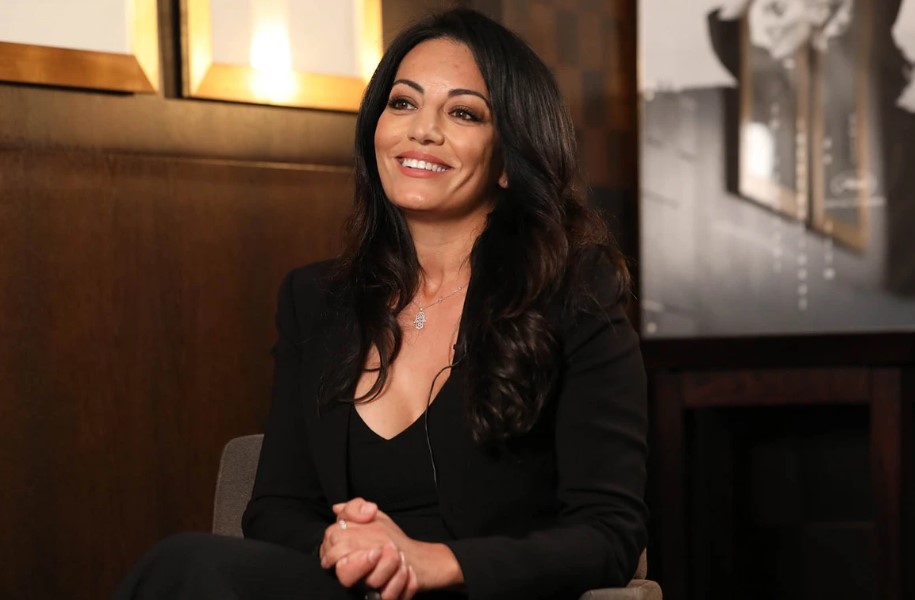
Maryam Touzani is a film director born in Tangier (Morocco) in 1980. After studying in London, Maryam Touzani returned to her home country and began her professional career as a journalist, before turning her focus to film directing. In 2011, she released her first short fiction film, entitled Quand ils dorment (“When They Sleep”). This was followed by her first feature-length documentary, which inspired the feature film directed by Nabil Ayouch, Much Loved (2015), whose central theme is prostitution in Moroccan society. This first feature film already reveals the strong social conscience that would continue to characterise the director’s entire filmography.
Filmography and themes in his works
Indeed, her filmography as a director is consistently underpinned by this social and activist element, which seeks to portray the Morocco of the director herself. As she explains in an interview promoting her latest film, Calle Málaga (due for release in Spanish cinemas in April), she draws inspiration from her own life and her own perception of her native country, drawing on her memories and her senses:
“Spanish food did indeed find its place in the film, with tortillas and croquettes, for example, because I too grew up with that food. My mother cooked Moroccan dishes, but also many Spanish ones, following my grandmother’s tradition—whose gestures I needed to see again, whose smells I wanted to smell again, and whose flavours I wanted to taste again. I think I tried, unconsciously, to keep those memories alive, and cinema has that capacity. I sought to make those memories eternal so that they would not fade away.” (Excerpt from the Mediapart interview with Maryam Touzani, 24 February 2026, translated from French).
This narrative style, combined with an impeccable aesthetic and casting choices, has taken Maryam Touzani’s films to the most prestigious festivals in the film industry. Her first feature film, Adam, was selected for the 2019 Cannes Film Festival in the “Un certain regard” section. Adam was also Morocco’s entry for the Best International Feature Film category at the 2020 Oscars, making Maryam Touzani the first Moroccan director to be nominated in this category.

In 2023, Maryam Touzani once again gained international recognition with her film The Blue Caftan, a tender story centring on three characters: Halim, Mina and Youssef. Set in Salé (Morocco), Maryam Touzani explores the taboo surrounding homosexuality in Moroccan society through the character of Halim (interpreted by Saleh Bakri), who has spent his whole life hiding his homosexuality until the arrival of Youssef (interpreted by Ayoub Missioui), a young man who wants to learn how to make caftans. With this story, Maryam Touzani once again garnered recognition at the 2022 Cannes Film Festival, winning the FIPRESCI Prize. In Spain, Lubna Azabal – who plays the character of Mina – was awarded Best Actress at the Valladolid International Film Festival (SEMINCI). With a beautiful and delicate aesthetic, and shots that sensitively capture the intimacy of each character, The Blue Caftan stands out for its emotional impact on the viewer.

Representation and visibility of Arab cinema
Maryam Touzani’s work follows in the footsteps of Arab filmmakers who portray their countries with accuracy and honesty. In a film industry that continues to favour the production and distribution of Western works, it is important to give visibility to these filmmakers, who help to counter the stereotypes and ignorance about Arab societies perpetuated by the colonial cinema of the past. Although we are seeing a modest rise in the number of Arab films in cinemas, the figures still do not reflect the recognition they deserve: the Moroccan Film Centre (CMM) notes in its 2023 film report that box office takings are divided between American films (46%), Moroccan films (36%), French films (5%), Indian films (2%) and Egyptian films (2%). With the exception of these 2% of Egyptian films, there is a noticeable near-absence of films from the Arab world in Morocco, despite the fact that it is part of this region. To prevent Western filmmakers from portraying the MENA region according to their own codes, it is important to support and promote the work of directors such as Maryam Touzani.
“I tried, unconsciously, to keep those memories alive, and cinema has that capacity. I sought to make those memories eternal so that they would not fade away.”
Currently promoting her new film Calle Málaga in France, Maryam Touzani presents a story centred on the passing of traditions from one generation to the next, focusing on the character of María Ángeles (interpreted by Carmen Maura), a lifelong resident of Tangier who fled Franco’s dictatorship. In Spain, Calle Málaga will be released in cinemas on April, 1st of 2026.
© Copyright CaramelFilms 2025
Bibliography:
Ad Vitam Distribution. (2019): Adam. https://www.advitamdistribution.com/films/adam/
Ad Vitam Distribution. (2023). Le bleu du caftan. https://www.advitamdistribution.com/films/le-bleu-du-caftan/
Caramel Films. (2025). Calle Málaga. https://www.caramelfilms.es/peliculas/calle-malaga/
Centre cinématographique marocain. (2023). Bilan cinématographique année 2023 (p. 55). https://www.ccm.ma/inter/bilans/19-bilan.pdf
Lépine, C. (2026, 24 février). Entretien avec Maryam Touzani, réalisatrice de “Rue Málaga”. Le Club de Mediapart. https://blogs.mediapart.fr/edition/cinemas-mediterreneens/article/240226/entretien-avec-maryam-touzani-realisatrice-de-rue-malaga
Visions d’Afrique. (2025). Maryam Touzani. https://visionsdafrique.fr/intervenant/maryam-touzani/