


Articles
Al-Andalus and the continuity of ancient quarrying in La Alcarria
Apr
Article author: Sergio Isabel Ludeña (Coordinator of the Centre for Studies on Islamic Toledo)
Date of publication of the article: 31/03/2026
Year of publication: 2026
Article theme: Archaeology.
From the Center for Studies on Islamic Toledo (Islamic Culture Foundation) and the Geological and Mining Institute of Spain (IGME-CSIC), the first phase of a study focused on the historical quarries of the southeastern area of the Alcarria region [1], between the present-day Spanish provinces of Cuenca and Guadalajara, has been jointly developed. This has also received support from the Regional Government of Castilla-La Mancha through its funding program for the implementation of research projects on the archaeological and paleontological heritage located in that region.
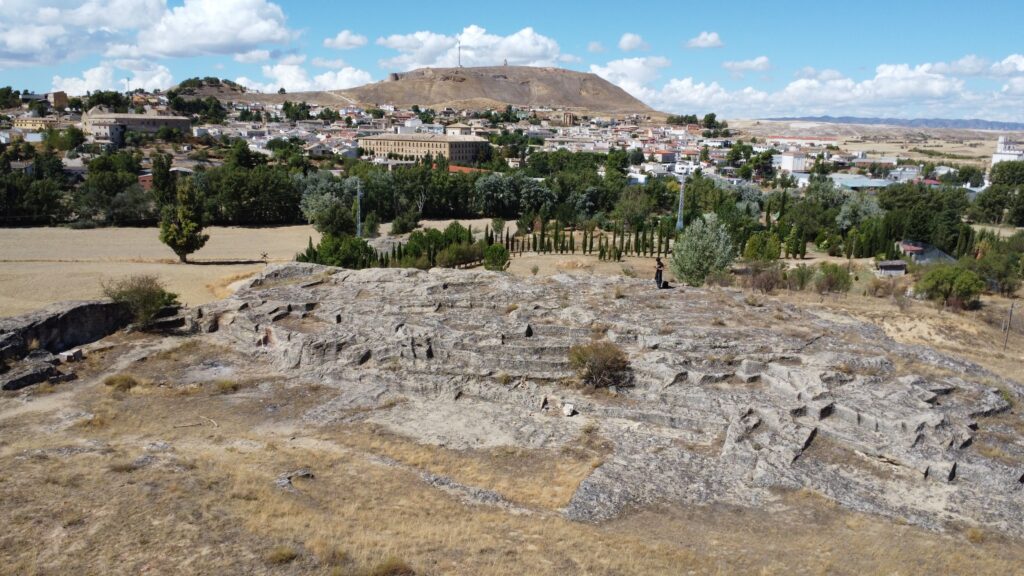
These works have made it possible to document several groups of stone quarrying operations in this territory, especially in the area around Huete, and are helping to reflect on the use of stone –particularly ashlar masonry– in the architectures built during different historical periods. In fact, as it will be discussed in this article, various studies are pointing to the fundamental role that al-Andalus played in the recovery of both quarrying systems and stone extraction techniques from Antiquity in the Iberian Peninsula.
The quarry as an archaeological site and productive space
From a remote past, humanity recognized the potential of one of the geological materials, stone, and began the exploitation of its natural outcrops both for the construction of buildings and for the creation of multiple tools. From Antiquity onwards, this activity became, driven by the monumental programs of the Roman world, one of the most important in social and economic terms. Although large constructions required a notable variety of materials for their realization, it is undeniable that stone materials were essential for their execution.
Various studies are pointing to the fundamental role that al-Andalus played in the recovery of both quarrying systems and stone extraction techniques.
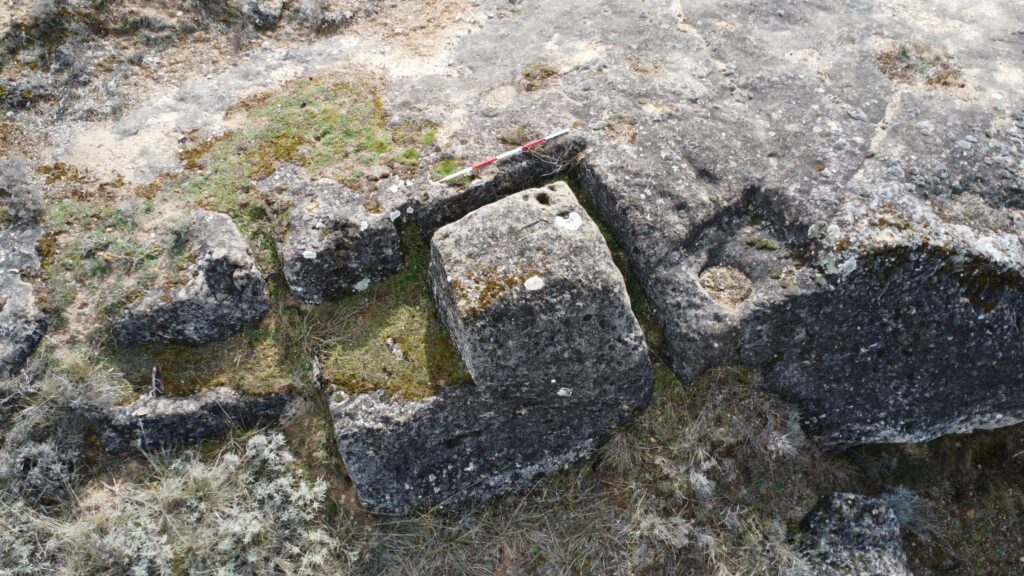
Many of these activities have left their mark on the landscape. On certain rocky outcrops, it is still possible to detect the multiple imprints that the quarry workers left when extracting their pieces. Examples of this are tool marks, such as picks or wedges, or hollowed-out spaces left by the blocks of stone removed from the bedrock, which have even, at times, created stepped formations or internal platforms within the outcrops.
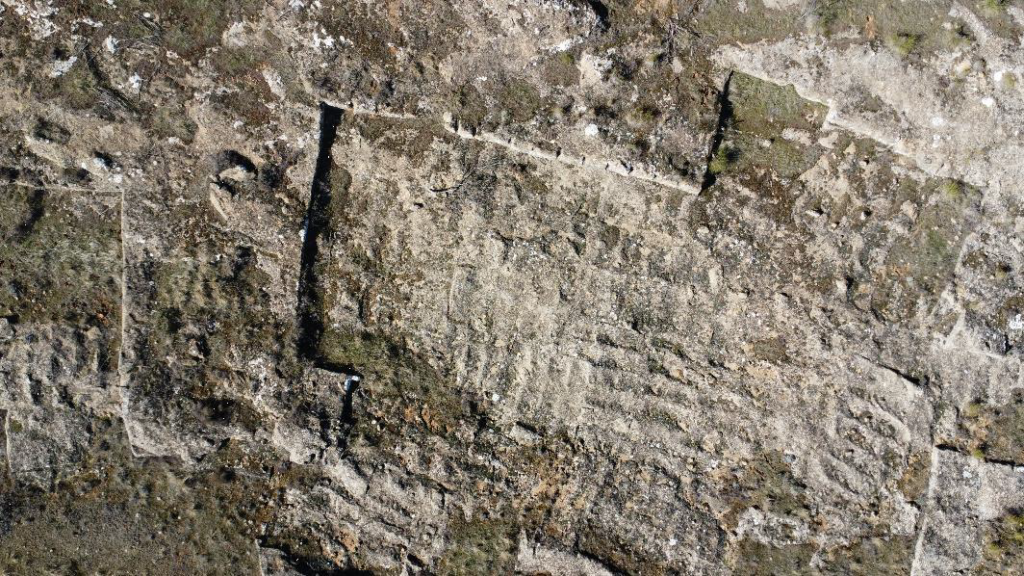
The documentation and analysis of these quarries make it possible, precisely, to expand the knowledge of how the existing architectures in each territory were constructed. It must be taken into account that behind any building there was a construction project that undoubtedly began in the quarry and was completed at the place where the work was carried out [2]. In this way, past communities sought suitable outcrops in the surroundings of their settlements, obtained from them the necessary stone materials, and transported them to the construction site. Tracing, thanks to archaeology, this entire cycle of stone offers the possibility of completing the history of past societies and their technical knowledge.
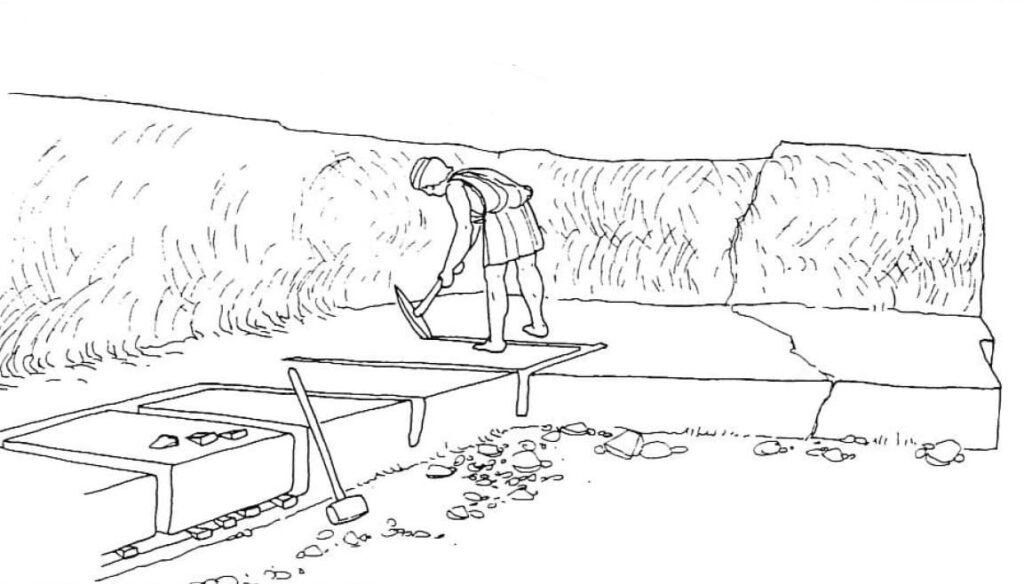
Historical quarries must be understood as former productive spaces, sometimes with activity extending over several centuries, and as archaeological sites that preserve extensive information about these processes.
From Rome to al-Andalus. Quarrying in the medieval world of the Iberian Peninsula
For a long time, it has been considered that during Late Antiquity and the Early Middle Ages constructions were carried out through spoliation –or reuse (transport?)– of stone from buildings of previous periods or, directly, with more modest materials such as earth or brick. According to these approaches, during these centuries the extraction of ashlars from ancient quarries was abandoned, and the technical knowledge of Roman constructions would not be taken up again in Western Europe until the 12th century [3]. However, research in recent decades is questioning these assertions and highlighting the importance of the Iberian Peninsula in the recovery of these activities through one channel: al-Andalus.
Al-Andalus acted, as in other fields of knowledge, as a bridge between both ends of the Mediterranean.
Despite the gradual disappearance of large-scale construction projects in much of the western Mediterranean, the survival of techniques and the execution of these architectures was maintained in the Byzantine Empire. Thus, territories such as those of the Visigothic kingdom during the 6th and 7th centuries experienced a loss of the productive cycles of stone: only sporadic extractions from outcrops were carried out, many tools and technical knowledge disappeared –such as ashlar quarrying– and Roman buildings were converted into quarries [4]. In addition, their buildings were the result of a decentralized system that depended on the patronage of private individuals with more limited and unequal economic and human resources [5].
The Islamic political domination over former Byzantine territories, as well as its contacts with this empire, allowed the arrival of quarry workers with such knowledge to the Iberian Peninsula.
Al-Andalus represented a novelty in the Iberian Peninsula compared to the situation in the rest of Western Europe. The Islamic political domination over former Byzantine territories, as well as its contacts with this empire, allowed the arrival of quarry workers with such knowledge to the Iberian Peninsula. Likewise, it was made possible by the promotion of large architectural projects by the Umayyad state, with the resurgence of urban centers and the restoration of the idea of prestige and power linked to stone. Multiple Andalusi constructions demonstrate the recovery of techniques and the development of new extractions, such as the Mosque of Córdoba (from its earliest phases in the 8th century) [6], the emirate wall of Ciudad de Vascos (Navalmoralejo, Toledo) [7], or the palatial city of Madīnat al-Zahrā’ (Córdoba) [8].
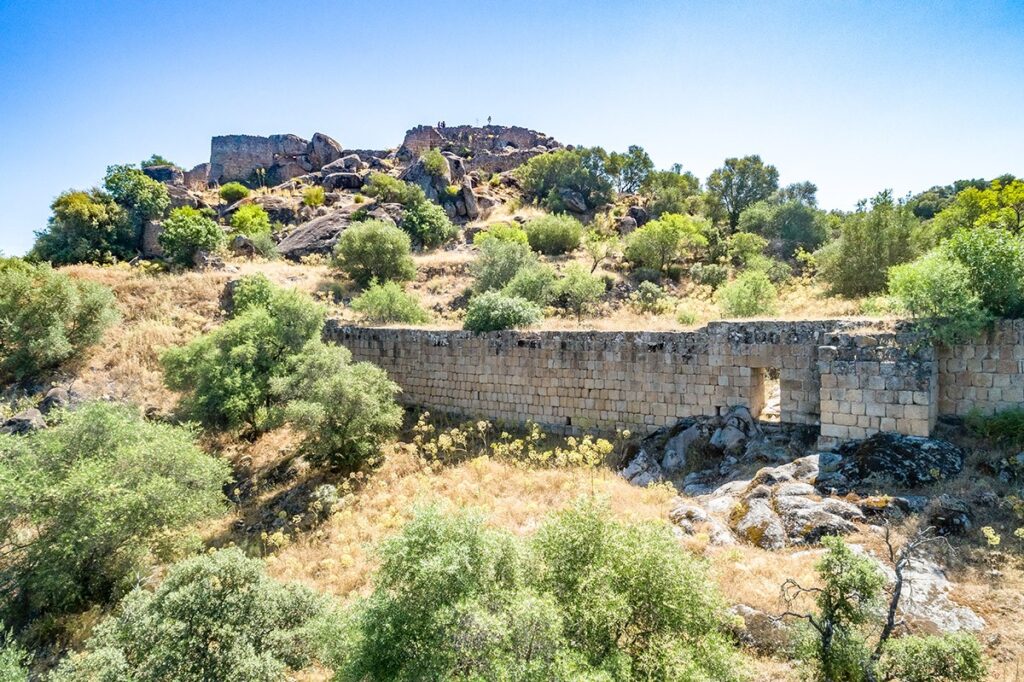
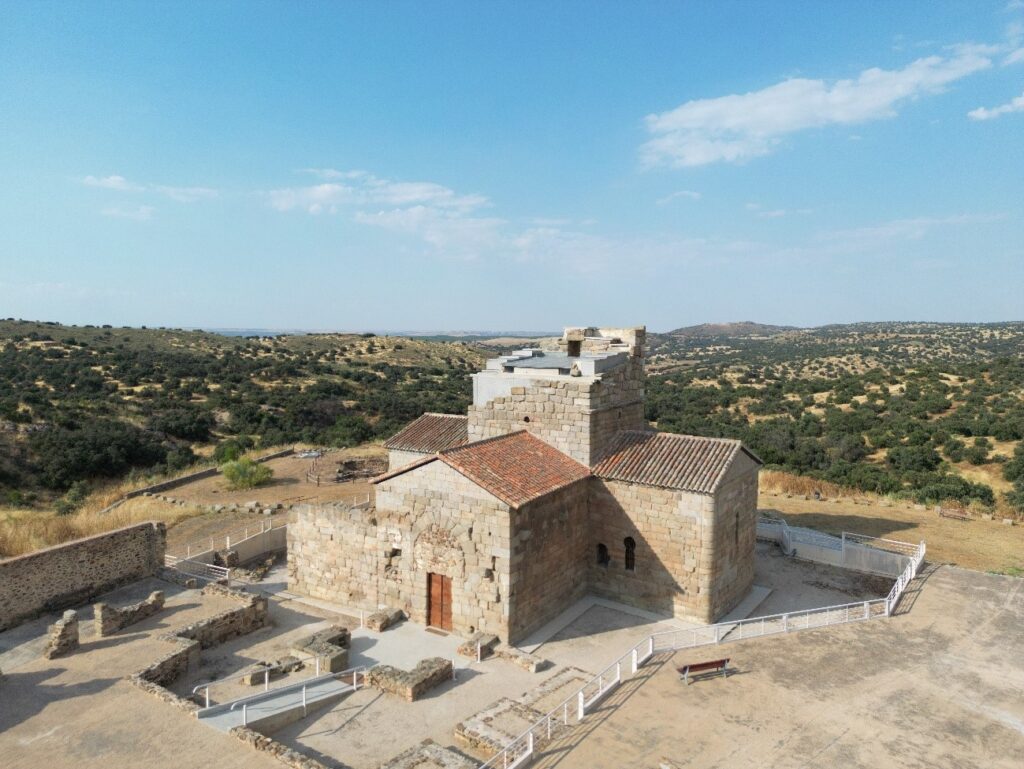
These considerations are being addressed by several researchers in order to rethink the scope of early medieval constructions and their corresponding stone quarries. A paradigmatic case is the work being carried out by María de los Ángeles Utrero and Enrique Álvarez Areces on constructions dating between the 8th and 10th centuries, such as Santa María de Melque (San Martín de Montalbán, Toledo), San Pedro de la Mata (Sonseca, Toledo), San Miguel de la Escalada (Gradefes, León), San Cebrián de Mazote (Valladolid), Las Mesas de Villaverde (Ardales, Málaga), or San Isidoro de León [9]. In any case, and despite these efforts, there is still a notable lack of studies on quarries from this period. Nevertheless, all of this indicates that al-Andalus, as in other fields of knowledge, acted as a bridge between both ends of the Mediterranean.
From the late 11th century and the beginning of the 12th century, architectural projects became widespread in the rest of the Iberian Peninsula and Western Europe, such as castles, cathedrals, or monasteries, which required these construction techniques and their corresponding stone quarries. Stone extraction would expand from this moment on through the following centuries, during the Late Middle Ages and the Modern Age, in a continuous manner.
Historical quarrying in the southeastern part of the Alcarria: a reflection of its recovery during al-Andalus
The aforementioned research project developed by the Center for Studies on Islamic Toledo (CETI-FUNCI) and the Geological and Mining Institute of Spain (IGME-CSIC) has made possible to gain deeper insight especially into the historical quarries of one of the main towns in the southeast of the Alcarria: Huete (Cuenca).
Huete was a medina founded in the 8th century, during the Emirate of Córdoba. With the creation of the caliphate, Huete became part of the cora (a small territorial division in the Andalusi period) of Santaver, the Andalusi territorial division that encompassed the present-day province of Cuenca, part of Guadalajara, and part of Teruel. The original foundation was located on the Cerro del Castillo, where the alcazaba and a walled enclosure were established, also including the southern slope. Between the 9th and 10th centuries, Huete was one of the most important cities in the area, even competing with Cuenca. In this territory settled the Amazigh dynasty Banū Ḏū-l-Nūn, known for its continuous revolts against Cordoban power. In fact, when this lineage came to rule the taifa of Toledo, Huete became part of it. At the time when Alfonso VI took control of Toledo, al-Qādir, the last Andalusi king of Toledo, withdrew to Huete before establishing himself as governor in the taifa of Valencia. For its part, Castilian power had to face the Almoravid response, as well as the siege of the city for ten days by the Almohad troops of Yūsuf I, who, however, failed to establish themselves within the walls.
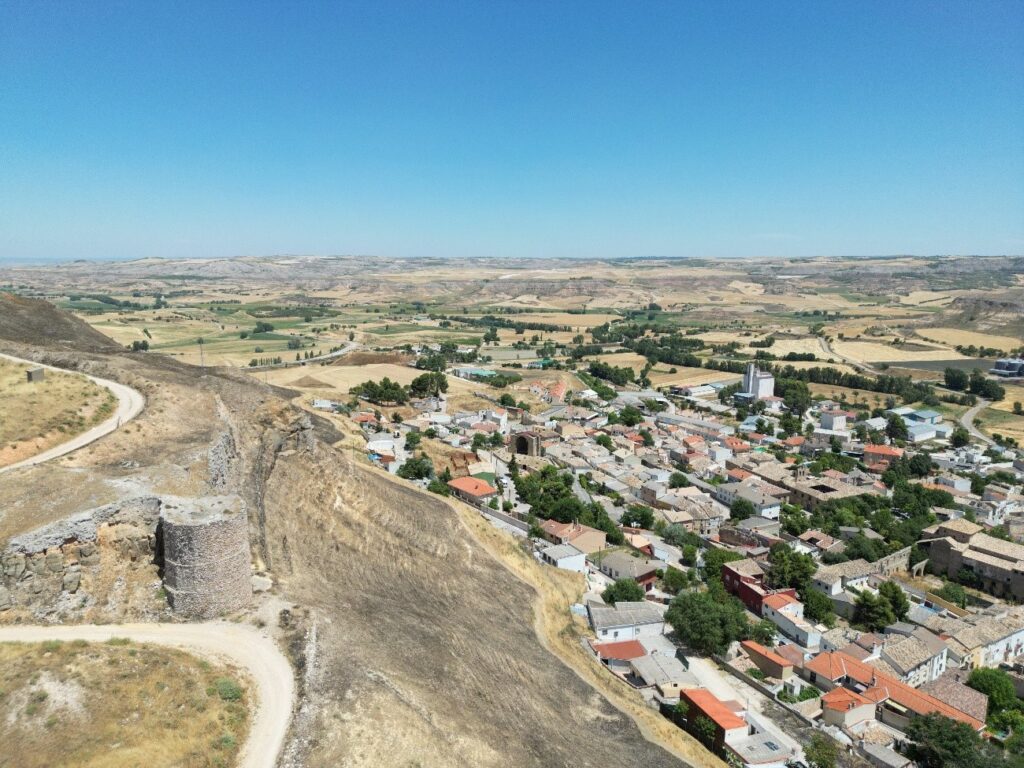
During the research project, up to 28 ashlar extraction areas have been documented in the surroundings of Huete in sandstone outcrops –a sedimentary rock very present in this territory. These exploitations have been organized into 11 distinct groups that show a significant volume of stone obtained, which speaks to the notable demand that existed for this material from nearby settlements for the construction of architectures over the centuries. This can be observed by visiting Huete, where remains of the castle, the walls, and multiple churches, palaces, or convents are preserved, as well as the Cerro de Alvar Fáñez site, a little more than one kilometer from the urban center.
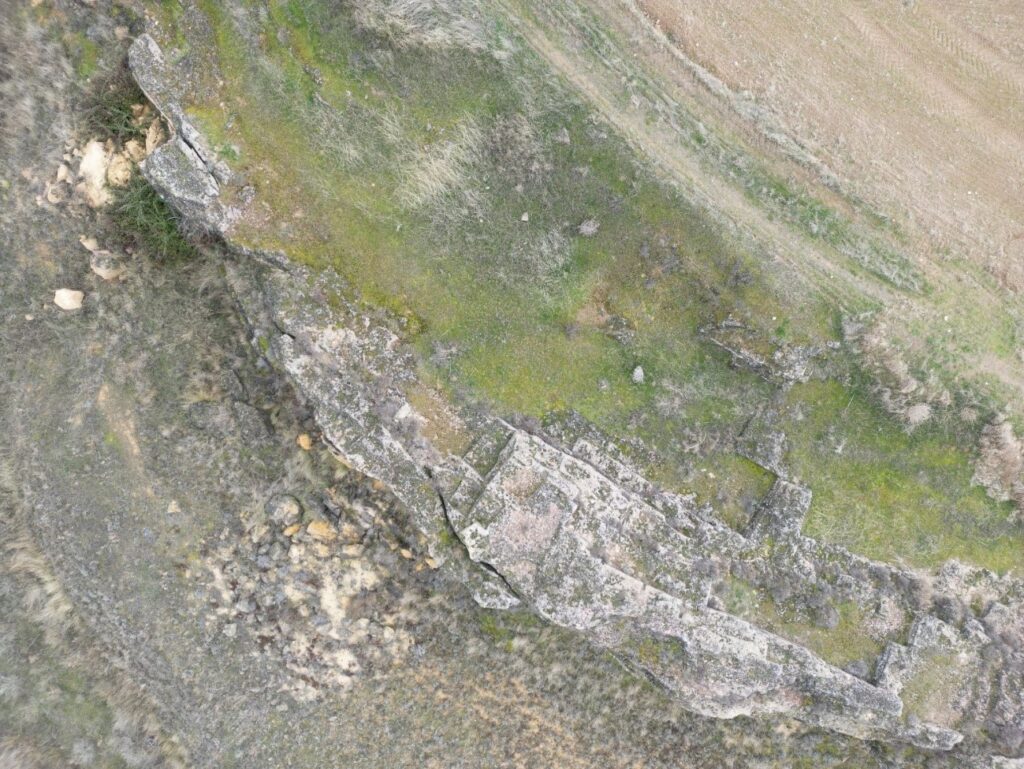
Until now, the oldest evidence of buildings with stone ashlar in this area is found at Cerro de Alvar Fáñez [10], a settlement dated to the Roman period that had extensive architecture in which local sandstone is very prominent. These constructions with large stone blocks –unless they were a sporadic use in their structure, resulting from the spoliation of materials from another earlier building– do not seem to be documented again in this area until the contexts found in the excavations of the Islamic alcazaba located on the Cerro del Castillo in Huete [11]. In this way, the same pattern of recovery of quarrying and stone extraction techniques from the ancient world during the Andalusi period is once again reflected.
Conclusion
However, the preliminary progress of this research represents only a first phase of the project, which is expected to continue in the coming years with the aim of clarifying the relationships between the stone extraction areas and the architectures where this material was used. As previously indicated, this is essential to understand the entire cycle of stone and the multiple human activities surrounding it. Likewise, reflection is needed on the importance of studying so-called “ordinary” rocks, generally associated with local or regional quarries, compared to “noble” rocks, with large-scale exploitation, long-distance Mediterranean transport, and more attention from specialists. In the area of Huete, the presence of this second type is nonexistent, so it was only thanks to stones such as sandstones –“ordinary” ones– that the construction of the region’s architecture was possible. The labels attributed to these materials and the need for local or regional studies in this regard should be reconsidered.
Este artículo está disponible en Español.
Notes
[1] An overview of the historic quarries in this region can be found in: Isabel Ludeña, 2022, 2023 and 2024.
[2] See Álvarez Areces, E. et al. (2017).
[3] Ward-Perkins, 1971.
[4] Bessac, 1996; Cagnana, 2000.
[5] Caballero Zoreda and Utrero Agudo, 2013; Álvarez Areces et al., 2017: 37-46.
[6] Hernández Giménez, 1975; Marfil Ruiz, 1999.
[7] Bru Castro, 2014; which identifies certain mining areas in the medina and its surroundings.
[8] Penco Valenzuela et al., 2004; Vallejo Triano and Fernández Barba, 2010; which document the extraction of stone material (calcarenite) at the Santa Ana de la Albaida quarry (Córdoba).
[9] Notable contributions include, amongst others: Álvarez Areces and Baltuille Martín, 2017; Álvarez Areces et al., 2016, 2017, 2020 and 2021; Caballero Zoreda and Utrero Agudo, 2005, 2012 and 2013; Utrero Agudo, 2017a, 2017b, 2018 and 2020; Utrero Agudo and Álvarez Areces, 2021 and 2022; Utrero Agudo and Murillo Fragero, 2014 and 2022; Utrero Agudo and Sastre de Diego, 2012; Utrero Agudo et al., 2016; Villa del Castillo et al., 2022.
[10] For further information on this site, see: Aguado Molina et al., 2007; Castelo Ruano et al., 2000; Castelo Ruano, 2008.
[11] For further information on these excavations, carried out in 1985, see: Moncó García, 1988.
Bibliography
Aguado Molina, M.ª et al. (2007). El hueso trabajado del yacimiento del «Cerro de Álvar-Fáñez» (Huete, Cuenca). Caesaraugusta, 78, 495-510.
Álvarez Areces, E. y Baltuille Martín, J. M. (2017). Materiales pétreos y canteras para la construcción de las iglesias de San Miguel de Escalada (León) y San Cebrián de Mazote (Valladolid). Arqueología y territorio medieval, 24, 115-150.
Álvarez Areces, E. et al. (2016). Canteras en el Altomedievo, materiales pétreos para la construcción de la Iglesia de San Pedro de La Mata (Sonseca, Toledo). Geotemas (Madrid), 16(2), 363-366.
― (2017). Geología y Arqueología. Estratigrafía de la Tierra, estratigrafía del patrimonio. Instituto Geológico y Minero de España.
― (2020). La cantera de granito de la iglesia altomedieval de San Pedro de la Mata (Toledo): Planificación, explotación y construcción. En V. García-Entero, S. Vidal Álvarez, A. Gutiérrez García-Moreno y R. Aranda González (Eds.), Paisajes e historias en torno a la piedra. La ocupación y explotación del territorio de la cantería y las estrategias de distribución, consumo y reutilización de los materiales lapídeos desde la Antigüedad (391-412). UNED.
― (2021). Santa María de Melque (Toledo, España): Recursos y entorno geológico de una construcción altomedieval. Geotemas (Madrid), 18, 869.
Bessac, J.-C. (1996). La pierre en Gaule Narbonnaise et les carrières du Bois des Lens (Nîmes) : Histoire, Archéologie, Ethnographie et Techniques. Journal of Roman Archaeology.
― (2003). L’extraction des pierres de taille et des roches marbrières dans l’Antiquité : les principales stratégies d’exploitation. En L. Poupard y A. Richard (Eds.), Marbres en Franche-Comté : Actes des journées d’étude, Besançon, 10-12 juin 1999 (21-34). Association pour la Promotion et le Développement de l’Inventaire Comtois.
Bru Castro, M. Á. (2014). La construcción de las defensas de la madina de Vascos. Aproximación a las canteras y a las pautas de obtención de material edilicio. En F. J. Gil Crespo (Ed.), Historia, arquitectura y construcción fortificada. Ensayos sobre investigaciones recientes (67-103). Instituto Juan de Herrera y Escuela Técnica Superior de Arquitectura de Madrid.
Caballero Zoreda, L. y Utrero Agudo, M.ª Á. (2005). Una aproximación a las técnicas constructivas de la Alta Edad Media en la Península Ibérica: entre visigodos y omeyas. Arqueología de la arquitectura, 4, 169-192.
― (2012). Cómo funcionaban los talleres constructivos en la Alta Edad Media hispánica. En Mundos medievales: espacios, sociedades y poder. Homenaje al profesor José Ángel García de Cortázar y Ruiz de Aguirre (Vol. 1, 427-440). Editorial de la Universidad de Cantabria.
― (2013). El ciclo constructivo de la alta Edad Media hispánica. Siglos VIII-X. Archeologia dell’architettura, 18, 127-146.
Cagnana, A. (2000). Archeologia dei materiali da construzione. S.A.P. Società Archeologica s.r.l.
Castelo Ruano, R. (2008). Cerámica ática documentada en el yacimiento de El Cerro de Alvar-Fañez (Huete, Cuenca): Cílica de figuras rojas. Grupo de Viena 116. Cuadernos de Prehistoria y Arqueología de la Universidad Autónoma de Madrid, 34, 77-103.
Castelo Ruano, R. et al. (2000). Arqueología en la comarca de La Alcarria conquense: el yacimiento del cerro de Alvar Fañez (Huete, Cuenca). Cuadernos de Prehistoria y Arqueología de la Universidad Autónoma de Madrid, 26, 95-150.
Hernández Jiménez, F. (1975). El alminar de Abd Al-Rahman III en la Mezquita Mayor de Córdoba: Génesis y repercusiones. Patronato de la Alhambra y Generalife.
Isabel Ludeña, S. (2022). Las canteras en los paisajes de Ercávica: aproximación a las técnicas de extracción y a la organización de las explotaciones. En P. Mateos Cruz, M. Olcina Doménech, A. Pizzo y T. G. Schattner (Eds.), Small Towns, una realidad urbana en la Hispania romana (Vol. 2, 599-608). Instituto de Arqueología de Mérida.
― (2023). Notas preliminares sobre canteras históricas en el área sureste de La Alcarria. En E. Azofra Agustín, E. Rabasa Díaz y A. M.ª Gutiérrez Hernández (Eds.), El Arte de la Cantería. Historia y Técnica (243-254). Instituto Juan de Herrera.
― (2024). La cantería histórica en el sudeste de La Alcarria. Una visión de las explotaciones lapídeas del territorio de Ercávica desde la arqueología del paisaje, Universidad de Castilla-La Mancha [tesis doctoral].
Marfil Ruiz, P. F. (1999). Avance de los resultados del estudio arqueológico de la fachada este del oratorio de Abd al-Rahman I en la Mezquita de Córdoba. Cuadernos de Madinat al-Zahra: Revista de difusión científica del Conjunto Arqueológico Madinat al-Zahra, 4, 175-207.
Moncó García, C. (1988). La alcazaba de Huete. Avance de las excavaciones realizadas en 1985. En I Congreso de Historia de Castilla-La Mancha. Vol. 5. Musulmanes y cristianos: la implantación del feudalismo (51-60). Junta de Comunidades de Castilla-La Mancha.
Penco Valenzuela et al. (2004). Dos canteras romanas en galería en Colonia Patricia Corduba: Peñatejada y Santa Ana de la Albaida. Anales de Arquelogía Cordobesa, 15, 229-248.
Utrero Agudo, M.ª Á. (2017a). Construir y decorar iglesias en el altomedievo (ss. VIII-X). Recursos y protagonistas. Arqueología y territorio medieval, 24, 7-9.
― (2017b). San Pedro de la Mata (Sonseca, Toledo). Primeros resultados del análisis arqueológico de sus alzados y de sus materiales. En M.ª Perlines Benito y P. Hevia Gómez (Eds.), La Meseta Sur entre la Tardía Antigüedad y la Alta Edad Media (349- 372). Junta de Comunidades de Castilla-La Mancha.
― (2018). Arqueología de la producción arquitectónica en el Altomedievo Hispánico. Tecnología y contexto. En J. A. Quirós Castillo (Ed.), Treinta años de arqueología medieval en España (365-384). Archaeopress.
― (2020). La arqueología de la producción y la producción de iglesias. Utilizar, reutilizar y reciclar materiales en la tardoantigüedad y el altomedioevo. En P. Mateos Cruz y C. J. Morán Sánchez (Eds.), Exemplum et spolia: La reutilización arquitectónica en la transformación del paisaje urbano de las ciudades históricas (Vol. 1, 33-51). Instituto de Arqueología de Mérida.
Utrero Agudo, M.ª Á. y Álvarez Areces, E. (2021). La iglesia altomedieval de Las Mesas de Villaverde (Málaga), o la intención de construir sobre un macizo rocoso. SPAL: Revista de prehistoria y arqueología de la Universidad de Sevilla, 30, 269-307.
― (2022). El monasterio de San Miguel de Escalada (Léon): Arquitectura y canteras a lo largo de su historia. Consejo Superior de Investigaciones Científicas.
Utrero Agudo, M.ª Á. y Murillo Fragero, J. I. (2014). San Isidoro de León. Construcción y reconstrucción de una basílica románica. Arqueología de la arquitectura, 11, e014.
― (2022). Análisis arqueológico del conjunto de San Miguel de Escalada: de monasterio altomedieval a monumento histórico-artístico. En M.ª Á. Utrero Agudo y E. Álvarez Areces (Eds.), El monasterio de San Miguel de Escalada (Léon): Arquitectura y canteras a lo largo de su historia (31-120). Consejo Superior de Investigaciones Científicas.
Utrero Agudo, M.ª Á. y Sastre De Diego, I. (2012). Reutilizando materiales en las construcciones de los siglos VII-X. ¿Una posibilidad o una necesidad? Anales de historia del arte, 2, 309-323.
Utrero Agudo et al. (2016). San Pedro de la Mata (Sonseca, Toledo): Construir y decorar una iglesia altomedieval en piedra. Archivo Español de Arqueología, 89, 45-69.
Vallejo Triano, A. y Fernández Barba, R. (2010). Una aproximación a las canteras de piedra calcarenita de Madinat al-Zahra’. Cuadernos de Madinat al-Zahra: Revista de difusión científica del Conjunto Arqueológico Madinat al-Zahra, 7, 405-419.
Villa Del Castillo, A. et al. (2022). Las iglesias tardoantiguas y altomedievales del centro peninsular. Nuevos hallazgos y viejas cuestiones para una reflexión metodológica. En J. Salido Domínguez y R. Gómez Osuna (Eds.), Iglesias tardoantiguas en el centro peninsular: (Siglos V-VIII) (13-72). La Ergástula.
Ward-Perkins, J. B. (1971). Quarrying in Antiquity: Technology, Tradition and Social Change. Proceedings of the British Academy, 57, 137-158.