The following article is an abridged version of the original text ‘Islamic Madrid, Forgotten Madrid: An Analysis of Heritage Dissonance from the Case of the Cuesta de la Vega Wall Section,’ which can be found via the link at the bottom of this page.
Abstract:
This article analyzes the heritage dissonance affecting the conception of Andalusi heritage through the Islamic wall of Madrid, focusing on the case study of the Cuesta de la Vega wall section. To achieve this, archaeological documentation generated over recent decades was examined, and an analysis was developed to link this data with other critical factors in heritage interpretation, such as identity and the cultural construction of discourse. Thus, this article aims to move from the specific (the wall section) to the general (lines of study, debates, and references) in relation to other cases of Islamic heritage within the city of Madrid.
Introduction. Heritage Dissonance and Islamic Madrid: A Necessary Case Study
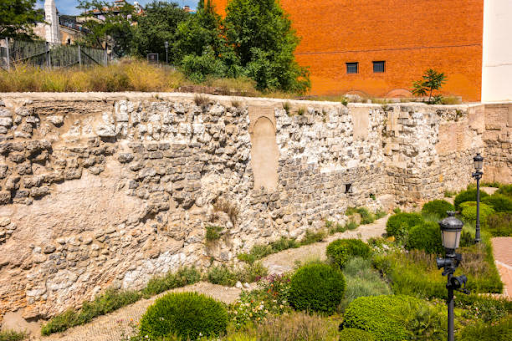
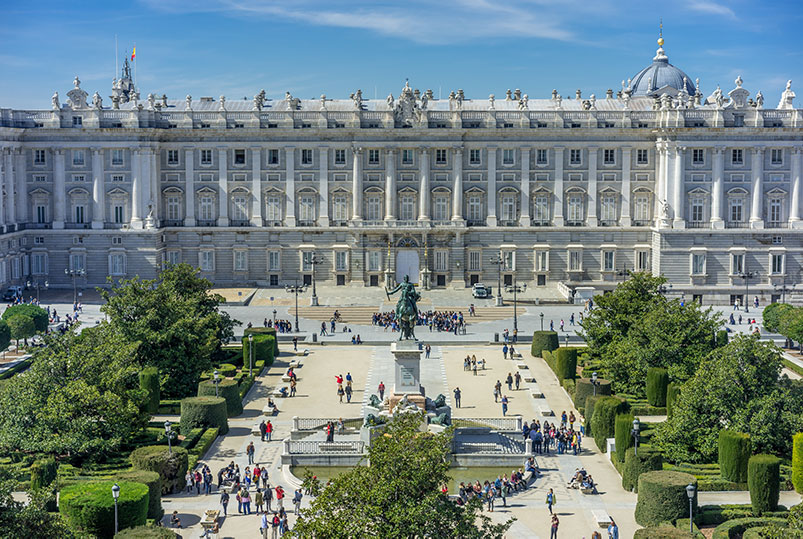
The wall section located in Emir Mohamed I Park stands behind the architectural complex formed by the Royal Palace and the Almudena Cathedral, in the area known as Cuesta de la Vega.
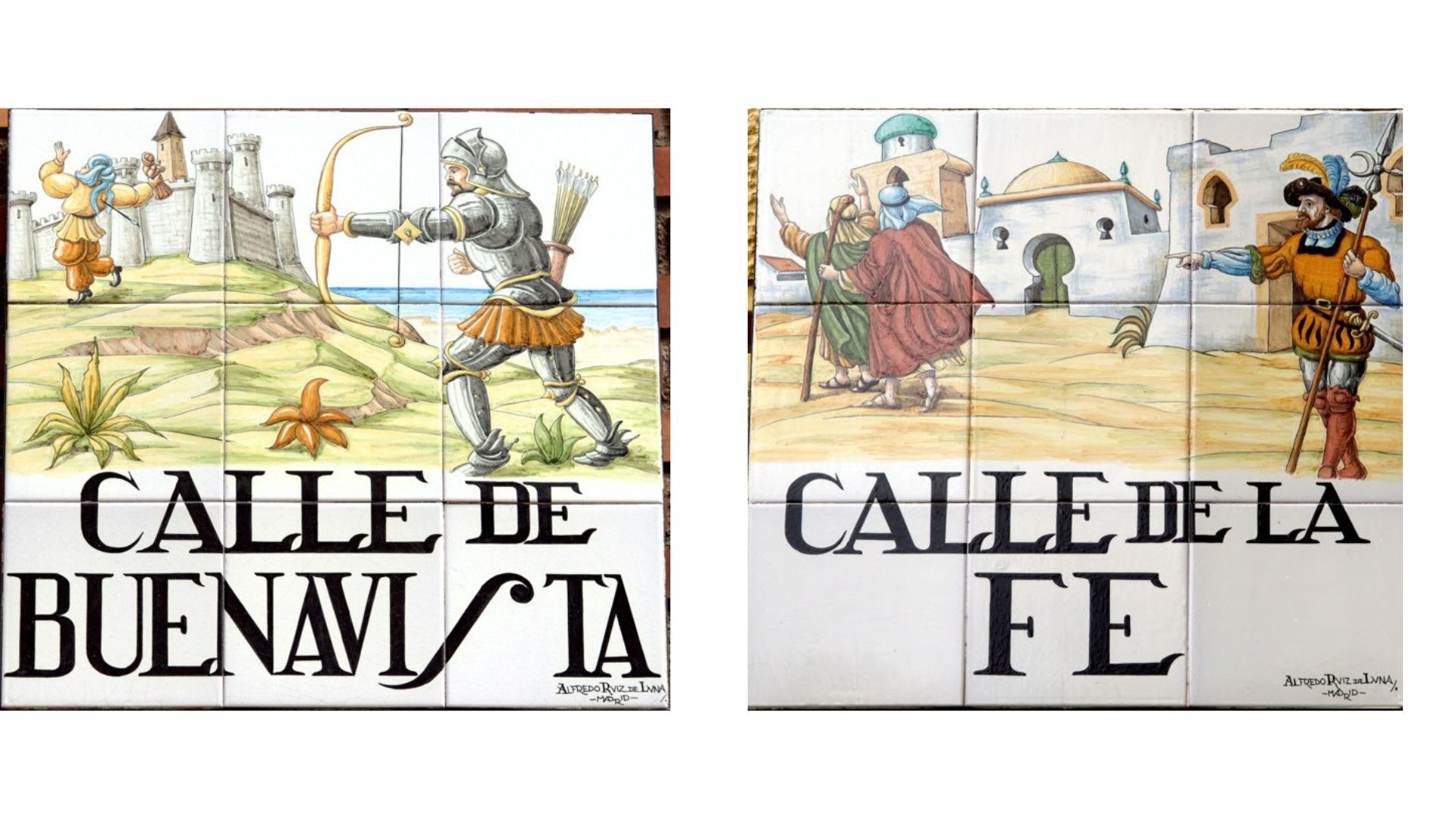
Historical sources suggest that it was Mohamed I who founded Maŷrīṭ in the 9th century as a defensive frontier outpost, owing to its logistical importance and its proximity to the city of Toledo. Nevertheless, it can be argued that the capital has rarely highlighted its Islamic origins—the very origins to which this wall section belongs. One of the primary objectives of this research is to analyze the intentionality behind what has seemingly emerged as a concealment of Islamic memory. In fact, one of the few occasions on which the town’s Islamic past was reclaimed was the creation of Emir Mohamed I Park, a landmark that joined the only two other references to Andalusi historical figures within Madrid’s street map. These symbolic acknowledgments stand in stark contrast to toponyms based on stereotypes derived from the Muslim presence and directly tied to the category of the “moro” (Moor), such as Plaza and Calle de la Morería, and Puerta de Moros. Other street names are directly linked to “neutral or clearly negative evocations […] in which Muslims are depicted as antagonists,” as seen in the cases of Buenavista and Fe streets.
Thus, as an initial hypothesis, how can we not consider that public policies and the management of different heritage realities (such as the Andalusi one) are linked in Spain to a deeply rooted and specific cultural vision that has been projected onto them? In this sense, a 19th-century, mythical Orientalist prism continues to be projected onto the Andalusi past, portraying al-Andalus as a curious anecdote about an invader who was successfully expelled, as a “parenthesis” in the “correct development” of Spain’s national history.
Currently, the issue of the wall remains highly topical. Numerous news reports in 2023 emphasized the city council’s interest in recovering and showcasing the remains of both the Arab and Christian walls. This interest culminated in a political initiative, the “Plan Especial de Protección para el ámbito APR01.02 Muralla y el Área de Protección de la Muralla” (2023), although the actual condition of these remains has stayed unchanged for a long time. Consequently, several questions regarding this policy measure seem highly relevant: at what point did this “Special Plan” arrive? Why was it approved now if there is, apparently, no determining factor? Is there any political interest behind this initiative? Will this measure be able to change the way heritage policies have been formulated in the capital regarding these unique assets? As if this development were not enough to warrant a study on the matter, a highly significant discovery was recently made during the archaeological excavations preceding the construction of the Royal Collections Gallery: an additional section of the original Andalusi wall, unearthed as part of the National Heritage complex in Madrid.
The Past in the Present and Identity within the Heritage of the city of Madrid
To explain and understand the dissonance that has developed around Andalusi heritage in Madrid, it is necessary to examine how this heritage has long been the focus of multiple academic, political, and heritage-related debates. Historically, three of the most relevant debates center on: the origin of Madrid as an Islamic settlement, its historical influence on subsequent eras, and its toponymy.
A systematic excavation plan hasn’t been carried out with the aim of locating and investigating the greatest possible number of archaeological elements related to Islamic Madrid, as highlighted by archaeologist Manuel Retuerce Velasco.
Within this range of discussions, the Cuesta de la Vega wall section has found itself deeply immersed, being such a highly representative asset—perhaps the most so, due to its dimensions and significance, among the existing remains of Andalusi Madrid. This representativeness, which I consider to be symbolic, has been profoundly linked to the political uses of the past and, consequently, to the debate surrounding the Islamic presence in the Iberian Peninsula. To fully grasp this, it is necessary to examine what certain historians have written. In this regard, establishing comparisons and approaching cultural assets as symbolic representations of the past—which may carry or have carried specific connotations—presents a necessary and useful perspective. How can we not consider that heritage and cultural assets have been interpreted from self-serving perspectives? Their use and appropriation have occurred across various contexts and eras.
Christine Mazzoli-Guintard has argued that Madrid was a small city within al-Andalus, and that this Andalusi reality would have enormously influenced other aspects, such as the urban layout of the historic center or its toponymy. Similarly, she traces the ideological and cultural construction of the city back to the Early Modern period, when the Habsburg Monarchy sought an alternative, artificial past to replace the Islamic one, pushing its origins back to the Greco-Roman era. Furthermore, she notes in her work that not all archaeological excavations have concluded with a consensus regarding what should be done with the unearthed heritage remains, due in part to the differing assessments made by archaeologists and specialists. Notable examples of these conflicting opinions include the Mercado de la Cebada and the aforementioned Plaza de Oriente, where remains were destroyed to clear the way for an underground parking lot in a highly central and, it must be said, prime real estate location.
In one of her articles, Maribel Fierro cited Eric Hobsbawm precisely regarding the relationship between the historian’s craft and the responsibility to “criticize the political and ideological abuse of history.” Fierro has studied the Andalusi question and, from her position as a historian, denounced how certain authors and interests have spread “simplistic” ideas at the service of an “extreme nationalism.”
The Andalusi heritage of Madrid is much more than a mere curious anecdote in the history of the modern city since, as far as we know today, it constitutes its very origin. Maŷrīṭ is an inherent part of what Madrid is today. Daniel Gil-Benumeya has introduced a highly relevant perspective to this outlook through the lens of the “right to the city,” understanding that public space—and its capacity to reflect different heritage-driven realities (whether officially recognized or not)—is a matter that demands a profound reassessment by the competent institutions.
The information in this article has been extracted from: García Ferragud J. (2024). Madrid islámico, Madrid olvidado: análisis de la disonancia patrimonial desde el caso del lienzo de muralla de la Cuesta de la Vega. Anaquel de Estudios Árabes, 35(2), 154-167. https://doi.org/10.5209/anqe.93422
Utilizamos cookies propias y de terceros para fines analíticos y para mostrarle publicidad personalizada en base a un perfil elaborado a partir de sus hábitos de navegación (por ejemplo, páginas visitadas).
Funcional
Always active
El almacenamiento o acceso técnico es estrictamente necesario para el propósito legítimo de permitir el uso de un servicio específico explícitamente solicitado por el abonado o usuario, o con el único propósito de llevar a cabo la transmisión de una comunicación a través de una red de comunicaciones electrónicas.
Preferencias
El almacenamiento o acceso técnico es necesario para la finalidad legítima de almacenar preferencias no solicitadas por el abonado o usuario.
Estadísticas
El almacenamiento o acceso técnico que es utilizado exclusivamente con fines estadísticos.El almacenamiento o acceso técnico que se utiliza exclusivamente con fines estadísticos anónimos. Sin un requerimiento, el cumplimiento voluntario por parte de tu Proveedor de servicios de Internet, o los registros adicionales de un tercero, la información almacenada o recuperada sólo para este propósito no se puede utilizar para identificarte.
Marketing
El almacenamiento o acceso técnico es necesario para crear perfiles de usuario para enviar publicidad, o para rastrear al usuario en una web o en varias web con fines de marketing similares.