


Articles
Islamic Madrid: Recovered history versus the single narrative
Apr
Date of publication of the article: 01/04/2026
Year of publication: 2026
By Daniel Gil-Benumeya, interviewed by Asunción Molinos Gordo and Andrea Pacheco González.
Madrid is not only the capital of Spain and the geographical centre of the Iberian Peninsula; it is the only modern European capital with Islamic origins. However, this fundamental fact of its urban history remains, for the vast majority of its inhabitants and visitors, hidden beneath layers of founding myths and institutional silence. In his book Islamic Madrid: The Recovered History, Gil-Benumeya not only unearths archaeological data, but also offers a profound reflection on how Spanish national identity has been constructed, to a large extent, through the denial of its Al-Andalus past.
Maŷrīṭ: A settlement on the frontier
The city emerged in the mid-9th century as a small settlement on the northern frontier of al-Andalus, referred to as Maŷrīṭ (مجريط) in Arab chronicles. At that time, Istanbul was still known as Byzantium and Cairo had not yet been founded. For two and a half centuries, Madrid was entirely Andalusi, and following its incorporation into the Kingdom of Castile, it retained a significant Muslim presence for a further five hundred years (the Mudejars).
Despite this longevity, the material and immaterial remains preserved from this period are “modest” and, above all, largely unknown. Gil-Benumeya points out that this lack of recognition is no accident. There is a historical ‘anxiety’ to seek Roman or Greek origins for Madrid, against all scientific evidence, simply because it is difficult to accept that the capital of the Spanish nation has Islamic roots.
The construction of the ‘other’ and the denial of history
Spanish national identity has historically been forged in opposition to Islam. The “Moor” has been the cultural trope that personifies the anti-Spanish, which has led to Madrid’s Islamic period being deemed eradicated with the Leonese conquest of the 11th century, ignoring the subsequent centuries of coexistence and the presence of Mudejars and, later, Moriscos.
“Gil-Benumeya proposes using history not to exclude, but to foster an understanding of otherness”.
Gil-Benumeya criticises the “compartmentalisation of academic knowledge”, which divides history into distinct periods, preventing us from seeing the continuity of the Islamic legacy. His work seeks to offer a comprehensive perspective spanning from the city’s foundation in the 9th century to the expulsion of the Moriscos in the 17th century. This approach is vital to understanding that Islam is not an external “intrusion”, but an integral part of the city’s historical fabric.
Habsburg Madrid and the symbolic erasure
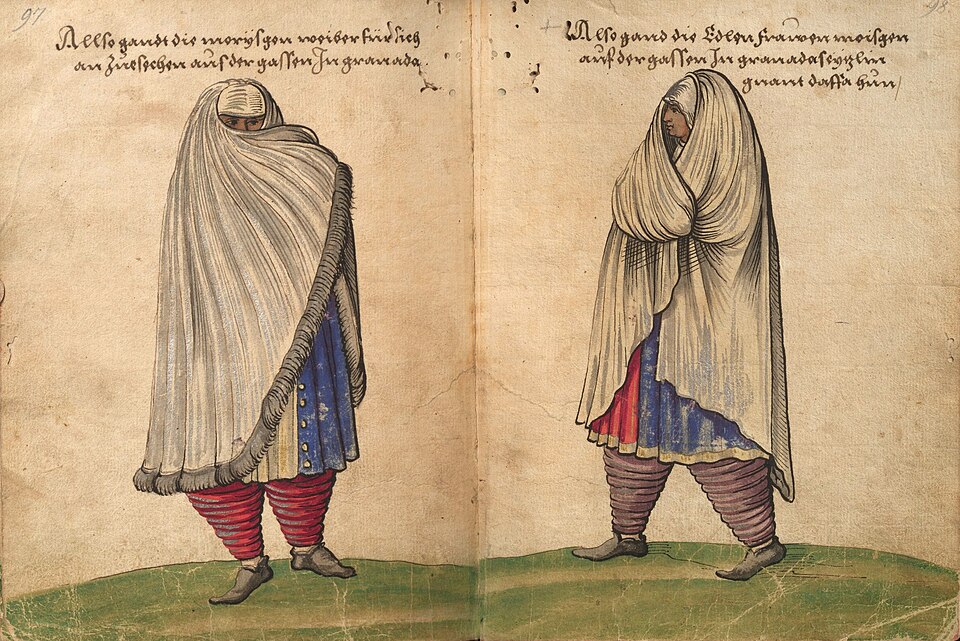
When Philip II established the court in Madrid in 1561, the city was to become the symbol of the Catholic monarchy, defender of the faith against the Reformation and Islam. To achieve this, much of the medieval city was destroyed and myths were concocted linking Madrid to the classical world.
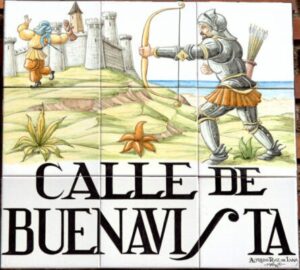
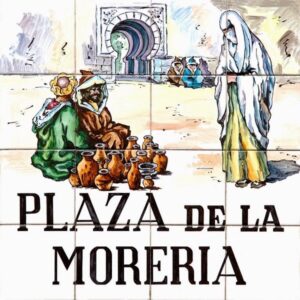
This desire to erase the past persists today in Madrid’s street names: of more than 10,000 names, barely three commemorate the Islamic past, whilst references to the ‘Reconquista’ abound. Furthermore, the management of the city’s heritage is marked by property speculation; Islamic archaeological finds are often treated as a “nuisance” during emergency excavations, rather than as an opportunity to rediscover this legacy and, above all, to protect it.
Phantasmagoria and the invisible presence
Gil-Benumeya draws on the concept of ‘phantasmagoria’ to explain how Islamic elements continue to inhabit the present-day fabric of Madrid. The ‘ghosts’ of the past manifest themselves all the more powerfully the more they are denied. A clear example is the Virgin of Almudena, patron saint of the city, whose name derives from the Arabic al-mudayna (“the citadel”), or the figure of Saint Isidore, whose hagiography contains syncretic elements from both Islamic and Christian traditions (for further information, see the article “Isidore and the dispute over his origins”).
This “ghost of the Moor” is also reflected in the present day. Contemporary Maghreb immigration is often interpreted as a “return”, using arguments that bear a striking resemblance to the anti-Moorish discourses of the 16th century.
From the Iberian Peninsula to Abya Yala: A mirror of colonialism
The interview also explores how this rejection of the Islamic travelled to the Americas (Abya Yala). The conquistadors projected onto the American “other” the imagery they brought with them of the “Moor”. Hernán Cortés referred to the temples of Tenochtitlán (Mexico) as “mosques”, demonstrating that Islam was his primary reference point for otherness.
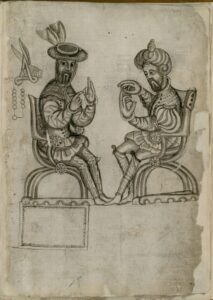
Gil-Benumeya highlights the connection between “blood purity” on the Iberian Peninsula and the colonial caste system, suggesting that these two processes of internal and external coloniality reinforced one another. According to the researcher, “colonial amnesia” in Spain runs just as deep as the forgetting of its Islamic past.
Towards a pedagogy of otherness
With regard to the “danger of a single narrative” discussed by the Nigerian writer Chimamanda Adichie, Gil-Benumeya proposes using history not to exclude, but to foster an understanding of otherness. Identity should not be understood as something static or binary, but as a complex and ever-changing process.
The author rejects the idea of “mestizaje” as something exceptional that blends natures that ought to be separate. Instead, he proposes that it is complexity and contradiction that truly define us. Reclaiming the Islamic narrative of Madrid is not merely an academic exercise; it is a tool for intervening in the present and combating Islamophobia and racism, which feed on the fiction of a historically and consistently white, Christian Europe.
Conclusion: The paradise of multiplicity
In this regard, the author draws on the vision of the Murcian mystic Ibn Arabi, who asserted that “reality manifests itself in diverse and contradictory ways, and that we must learn to perceive it in its various forms”. Accepting that Madrid is, at its core, a complex and indeterminate city allows us to abandon false certainties and cultivate a constant openness towards dialogue and the creation of new forms of coexistence. Ultimately, recovering the memory of Maŷrīṭ is a necessary tool for intervening in the present and building a fairer society that is fully aware of its own plurality.
- Daniel Gil-Benumeya (Morocco, 1970) is a researcher and lecturer in Arabic and Islamic Studies at the Complutense University of Madrid, coordinator of the Centre for Studies on Islamic Madrid, part of the Islamic Culture Foundation, and a researcher on the issue of Islamophobia.
- Asunción Molinos Gordo (Spain, 1979) is a conceptual artist and cultural researcher.
- Andrea Pacheco González (Chile, 1970) is a researcher, curator and lecturer. Director of FelipaManuela.
Interview originally published in: Pacheco González, Andrea, and Lorenzo Sandoval (eds.), Sombras ocultas en el tiempo, Madrid, FelipaManuela Ediciones, 2022.
Read the full interview in Spanish here.
Este artículo está disponible en Español.