

Articles
Ten routes through the Andalusi heritage of Castile-La Mancha
Oct
Date of publication of the article: 30/09/2025
Year of publication: 2025
Article theme: Castilla-La Mancha, heritage.
We are excited to introduce Routes of al-Andalus – a cultural and tourism project offering a series of routes that explore the rich heritage of al-Andalus across the five provinces of Castilla-La Mancha. This initiative is led by Eturia (Public Company for the Promotion of Tourism and Crafts in Castilla-La Mancha), in collaboration with Andalusí Experience (Experiencia Andalusí) and the Regional Ministry of Economy, Business and Employment.
FUNCI’s participation in the project has included studying both the tangible and intangible heritage featured along the routes, providing scientific advice on history and cultural heritage, designing the routes themselves, and creating the informational content for each one. This work has been made possible thanks to years of research by FUNCI through its All Andalus inventory – a comprehensive effort to identify, document, and study the cultural assets of al-Andalus heritage, available on its website.
The project includes ten itineraries that cross the provinces of the region, offering a journey through the diverse historical periods of al-Andalus. These routes trace the timeline from the first invasions of the Umyyad Caliphate of Damascus in 711, through the establishment of the independent Emirate of Córdoba, to the height of the Caliphate’s splendor and its later fragmentation into the Taifa kingdoms. Among these, special emphasis is placed on the Taifa of Toledo and its capital, Tulaytula (Toledo) – a major cultural center of al-Andalus rule. This Taifa’s territory largely overlaps with what is now Castilla-La Mancha, making it especially relevant to the region’s historical identity.
The itineraries also highlight/gather examples of al-Andalus cultural heritage from the Almoravid and Almohad periods, marked/characterized by territorial conflicts with the Castilian kingdoms. In this context, the project aims to offer a broader perspective on the lasting impact of Islamic culture on the Iberian Peninsula even after the Castilian conquests. It emphasizes how al-Andalus culture continued to shape the region – not only through architecture and artistic expression, but also in fields such as science, agriculture, food production, and medicine.
Paths of al-Andalus
The proposed routes begin in what was once Tulaytula (Toledo), an Islamic medina that served as the cultural capital of its time and as the center of the Middle March, the al-Andalus frontier region bordering other kingdoms on the Iberian Peninsula. To this day, the layout of the al-Andalus city can still be seen in Toledo, along with the material heritage of its three religions – mosques, synagogues, and churches – as well as alcazars and palace areas once associated with Islamic power. The continued presence of al-Andalus architectural and decorative styles in later structures also reflects how this cultural language was adopted by Christian authorities and, more broadly, by the Castilian nobility.
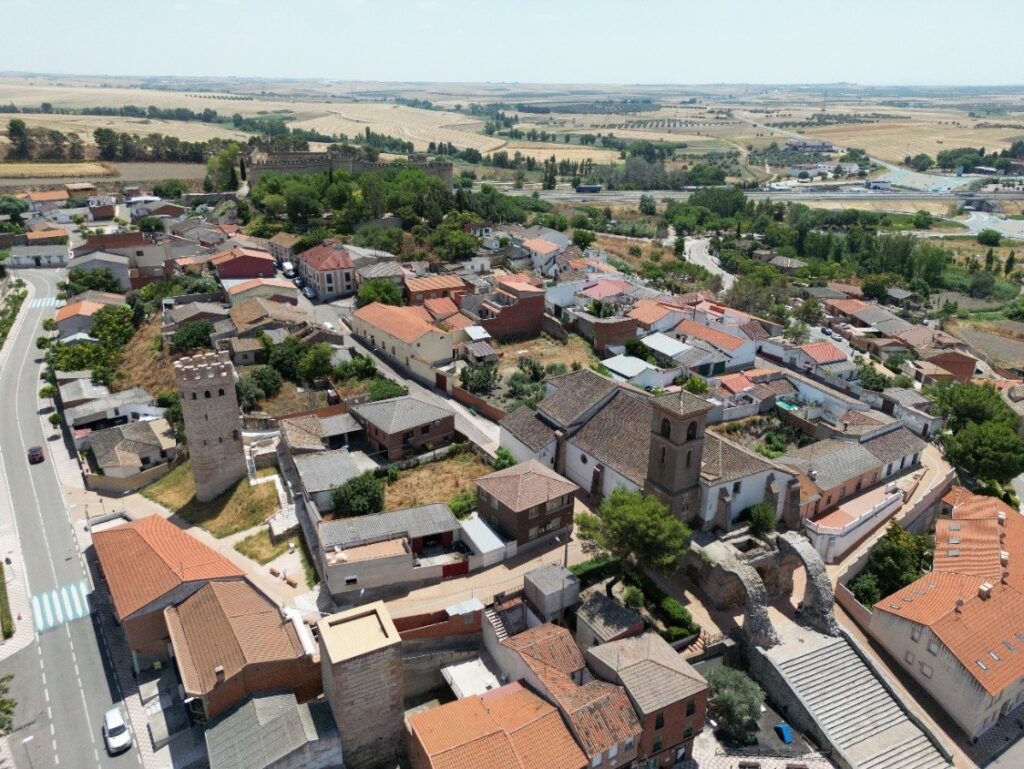
From Tulaytula (Toledo), the itineraries explore the development and consolidation of medinas (Islamic cities) in the area surrounding the Tagus Valley, with examples such as Makāda (Maqueda), Talabira (Talavera de la Reina), and the Islamic City of Vascos. The strengthening of the Middle March is also evident through the construction of watchtowers used for visual control of mountain passes and roads, as well as fortresses that helped establish settlements along the frontier. This defensive strategy was further extended by the construction of numerous castles along the corridor between Toledo and Córdoba – a key battleground between the Almohads and the Christian military orders, particularly the Order of Calatrava. Notable examples include the Palace of Alhambra, the Castle of La Estrella in Montiel, the Castle of Caracuel, and fortified towns like Alarcos and Qalʿat Rabāḥ (Calatrava la Vieja).
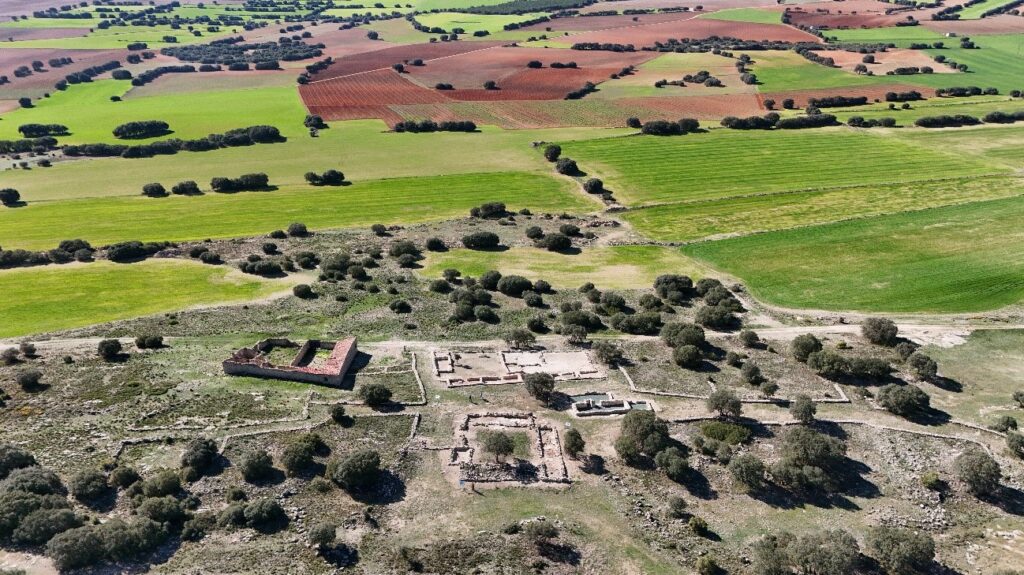
The proposed itineraries also cover sites that show the process of Arabization experienced by Christian communities prior to the establishment of the Emirate’s power. Examples include the monastic complexes of Santa María de Melque and San Pedro de la Mata, both located in the province of Toledo.
The territorial administration of al-Andalus
Other routes also offer insight into the organizational structure of al-Andalus. During the emirate and caliphate periods, the region was divided into coras – territorial districts centered around a medina (city). From these medinas, political, fiscal, judicial, and military authority was exercised over surrounding villages, agricultural areas, and fortresses. Later, these territories were reorganized as part of the Taifa kingdomas following the fragmentation of the caliphate.
One of the most notable areas is the cora of Santaver, with its capital Šantabarīa (near Cañaveruelas). The route also includes other important cities such as Uqlīsh (Uclés), al-Qannit (Cañete), Wabda (Huete) y Kūnka (Cuenca). These cities were the stronghold of the Banū Dhī l-Nūn dynasty, known for their repeated rebellions against Córdoba and later rulers of the Taifa of Toledo.
The cora of Santaver covered what is now the province of Cuenca, parts of Guadalajara, and parts of Teruel. Nearby, the cora of Tudmir governed the region that corresponds to present-day Murcia, the province of Alicante, and part of Albacete. In Albacete, the towns of Šintiŷŷāla (Chinchilla de Montearagón) and al-Qalʿa (Alcalá del Júcar) stand out on the route, both serving as border points between the Marca Media territory and the later Levantine kingdoms. The itinerary also presents agricultural practices of the time, such as those at the farmstead of La Graja in present-day Higueruela, where visitors can observe traditional dryland farming methods used in areas with limited water resources.
Al-Andalus: a living legacy
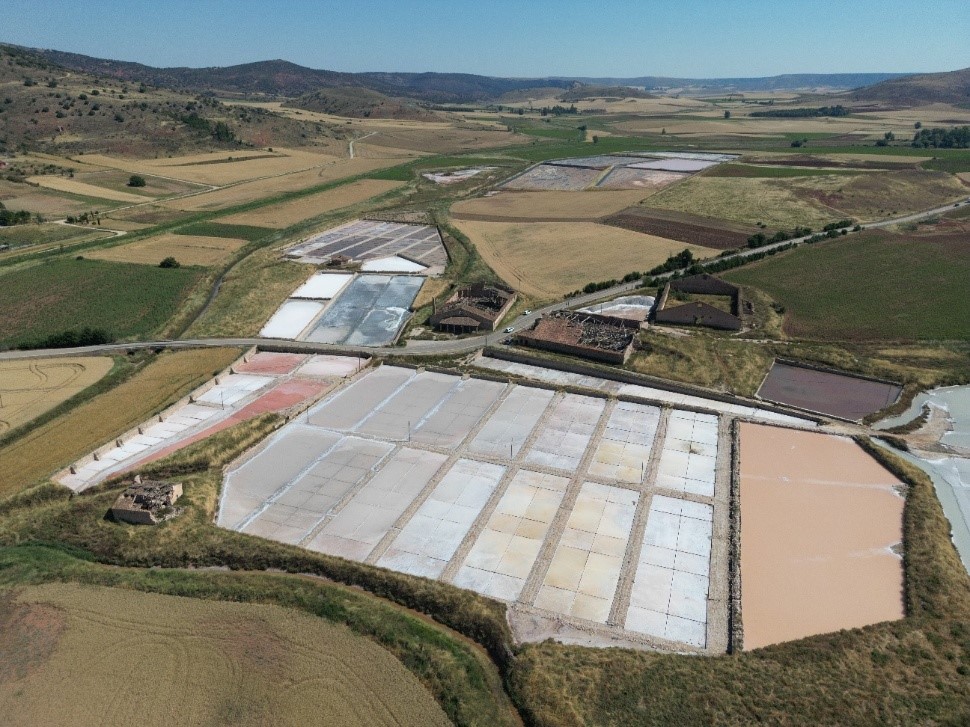
These itineraries not only highlight architectural heritage from al-Andalus, but also provide information about natural elements that help us understand how people related to the environment during that time. Some sites, like Laguna del Hito in the province of Cuenca, show the importance of seasonal wetlands along transhumance routes and for pasture use. Similarly, the region’s many salt flats – especially those near Sigüenza – illustrate the key role of the salt industry in food preservation and leather tanning. The vast pine forests of the Cuenca highlands also played a significant role, with their timber transported via the region’s rivers toward the eastern coast for the shipbuilding. Many agricultural products from that era are still present today in local cosmetics and gastronomy – including lavender, honey, eggplant, and sweets.
If we are to admire the present to understand the past, astronomical observatories are essential stops along the way. Places like those in the Astronomical Park of the Serrania de Cuenca or the Yebes Observatory offer the chance to observe the night sky and engage with astronomy – a science that flourished on the Iberian Peninsula thanks to scholars of al-Andalus.
Institutional collaboration for education on al-Andalus cultural heritage
From the Islamic Culture Foundation (FUNCI), we would like to thank the regional institutions for the trust they have placed in our organization for the research, creation, and development of these al-Andalus heritage routes in Castilla-La Mancha. We believe that institutional collaboration is essential – not only for discovering the traces of our past, but also for appreciating, understanding, and preserving their legacy in the present and for future generations.
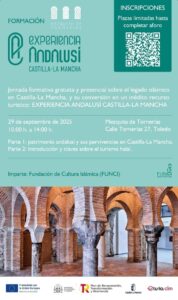
On September 22, 2024, the routes were officially presented alongside the launch of the Andalusí Experience (Experiencia Andalusí) project at the Tornerías Mosque in Toledo. As part of this initiative, on September 29, a free training session was held on the Islamic legacy in Castilla-La Mancha and the keys to its proper dissemination, as well as aspects of halal tourism. It was led by Sergio Isabel Ludeña, Scientific Coordinator of the Center for Studies on Islamic Toledo at FUNCI, and was well recieved by professionals in the region.
We encourage you to follow the proposed itineraries and explore the Routes of al-Andalus in Castilla-La Mancha!
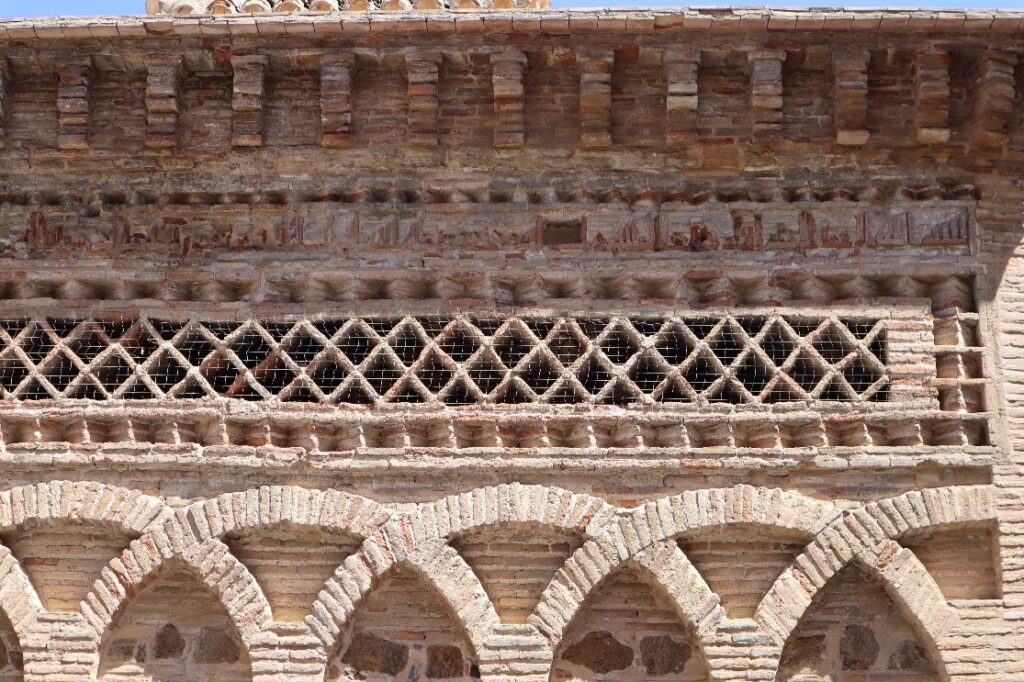
Cover image: Detailed image of the Bāb al-Mardūm mosque (Toledo) © FUNCI.
Este artículo está disponible en Español.