

Articles, Communications
An 8th-century dirham in Navalvillar (Colmenar Viejo, Madrid). On its archaeological context and possible interpretations
Feb
Article author: Aurora Ferrini Pernas
Date of publication of the article: 06/02/2026
Year of publication: 2026
Article theme: Al-Andalus, Archaeology, Archaeology, Madrid.
The following article compiles some of the most recent news about the silver dirham found in the rural settlement of Navalvillar (Colmenar Viejo). It provides a summary of the latest interpretations, which have treated it both as a sign of continuity and as an indication of the abandonment of the site between the 8th and 9th centuries.
In 1989, a unique coin was discovered at the early medieval site of Navalvillar, a mining and metallurgical estate dating from the mid-7th century to at least the mid-9th century. This coin could be one of the oldest examples of coinage in the Community of Madrid. The circumstances surrounding its discovery have raised questions: how did it get there, and what does its presence mean in this specific archaeological context, among others?1
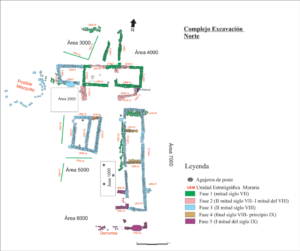
Figure 1. Planimetry of the northern complex and subdivision of phases2.
Numerous objects have been found during the various campaigns on the Navalvillar estate: knives, horseshoes, nails, and hinges. This, together with the remains of structures studied and their possible functionality, highlights the importance of mining and metallurgical activities at the site. In the case of this work, the information obtained from the excavations of the rooms that would make up the so-called “North Complex” (fig. 1) of the Navalvillar estate is of particular interest. Of particular note is the discovery of a silver dirham, found in the room marked “A33” (fig. 2) on the plans, published by Abad Castro on two occasions: in 1998 and 2006. The coin was found fragmented at the site and was subsequently restored at the National Archaeological Museum in 1989.
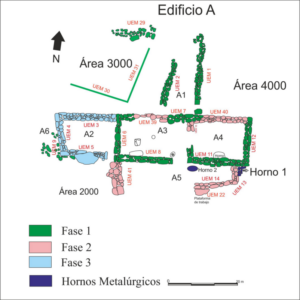
Figure 2. Planimetry of building A and subdivision of phases4.
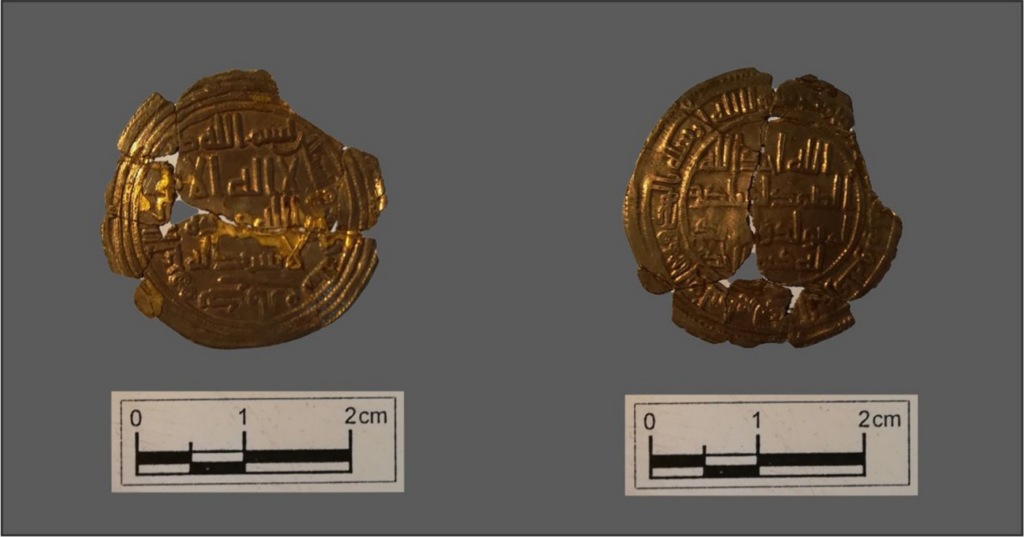
This dirham (fig. 3) from the reign of the Umayyad caliph Sulaymān ibn ʿAbd al-Malik, dated to the year 97 of the Hegira (715-716 AD), comes from the mint at Kirmen (Iran). According to Rubén-Lot García Lerga5, its context could correspond to the final moment of the occupation of this site: “Thus, the absence of emirate materials, except for the aforementioned dirham, together with the different levels of fire identified during the excavation work, could indicate the destruction or abandonment of the Navalvillar settlement in the early 8th century AD, coinciding with the arrival of Muslim troops on the Iberian Peninsula or shortly thereafter.
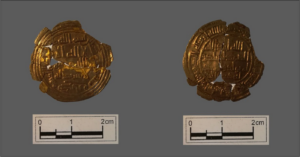
Figure 3. Dirham found during the 1989 excavation6.
However, as Silvia Berrica7 points out, the reconstructed stratigraphy and ceramic material show significant wear, suggesting contexts dating from the late 8th century. In addition to locally made ceramic remains, fragments of amphorae from the Emirate period have been identified, which were “made from a refined yellowish paste and subjected to an oxidizing firing process.” These ceramics were found in stratigraphic unit 2001 during the work carried out in 2012 and published by Fernando Colmenarejo and Rosario Gómez Osuna. In fact, Silvia Berrica distinguishes up to five phases that would extend the life of the site until the first half of the 9th century, and even proposes the existence of a possible mosque in the western sector of the site (fig. 1).
Thus, according to this perspective, “this chronology would coincide with the gradual process of widespread depopulation that occurred in rural settlements in the northern part of the Toledo district8” This abandonment is also documented at the El Rebollar site, where a set of five dirhams dating from the early 9th century was found.
CONCLUSIONS
The presence of an 8th-century silver dirham at the Navalvillar site is a remarkable find. Although some authors have linked the coin to an episode of abandonment in the early 8th century, a review of the stratigraphy and ceramic record suggests that the site remained in use until the first half of the 9th century. In this sense, the dirham cannot be considered a chronological indicator in itself, but must be interpreted in conjunction with its context. Nevertheless, its appearance has raised several questions about the nature of the processes of transformation, continuity, and progressive abandonment of settlements in the northern sector of Madrid.
BIBLIOGRAPHY
Berrica, Silvia. «Transformación y uso del espacio doméstico-artesanal: la reinterpretación de Navalvillar (Madrid, España) de granja a poblado (ss. VII–IX)». Anales de la Universidad de Alicante. Historia Medieval 26 (2025): 41–79. https://doi.org/10.14198/medieval.27905.
Centro de Estudios sobre el Madrid Islámico. «Descubiertas monedas del emir al-Hakam I en la sierra de Guadarrama». Madrid Islámico, 8 de junio de 2021. https://madridislamico.org/monedas-de-al-hakam-i-en-guadarrama/
García Lerga, Rubén-Lot. «La moneda emiral en la Meseta Sur. Un estado de la cuestión». Comunicación presentada en XV Congreso Nacional de Numismática, Madrid, 28–30 de octubre de 2014.
NOTES
1 Silvia Berrica, «Transformación y uso del espacio doméstico-artesanal: la reinterpretación de Navalvillar (Madrid, España) de granja a poblado (ss. VII–IX)», Anales de la Universidad de Alicante. Historia Medieval 26 (2025): 44, https://doi.org/10.14198/medieval.27905.
2 Berrica, «Transformación y uso del espacio doméstico-artesanal»: 58.
3 Berrica, «Transformación y uso del espacio doméstico-artesanal»: 61. Perteneciente al edificio A, ubicado en el área 2000, al norte del Complejo.
4 Berrica, «Transformación y uso del espacio doméstico-artesanal»: 61.
5 Rubén-Lot García Lerga, «La moneda emiral en la Meseta Sur. Un estado de la cuestión», comunicación presentada en XV Congreso Nacional de Numismática, Madrid, 28–30 de octubre de 2014, 1118.
6 Berrica, «Transformación y uso del espacio doméstico-artesanal», 65.
7 Berrica, «Transformación y uso del espacio doméstico-artesanal», 64.
8 Centro de Estudios sobre el Madrid Islámico, «Descubiertas monedas del emir al-Hakam I». Madrid Islámico, 8 de junio de 2021. https://madridislamico.org/monedas-de-al-hakam-i-en-guadarrama/
Este artículo está disponible en Español.