



Articles
The Moroccan caftan: UNESCO Intangible Cultural Heritage
Jan
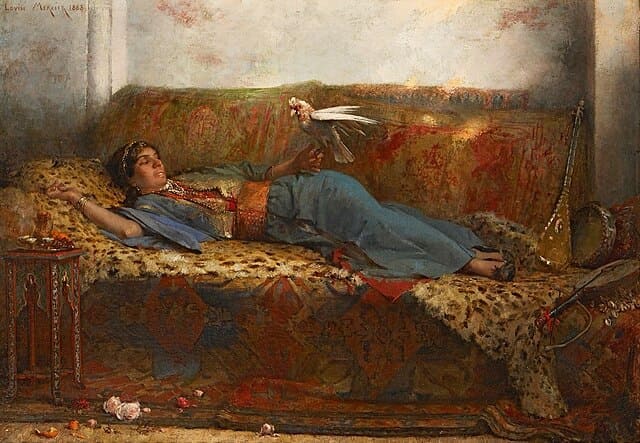
The Moroccan caftan is much more than a garment: it is a symbol of identity, an artisanal legacy, and a living reflection of Morocco’s history and culture. On December 10, 2025, UNESCO recognized this cultural richness by inscribing the caftan and the traditional knowledge associated with its craftsmanship on the Representative List of the Intangible Cultural Heritage of Humanity. This recognition highlights not only the beauty of the garment, but also the creativity, collective craftsmanship, and knowledge passed down from generation to generation.
Historical Origins and Evolution of the Moroccan Caftan
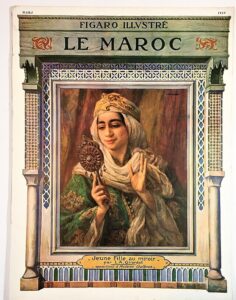
The term caftan comes from the Persian world and originally referred to long tunics with sleeves made of silk or cotton that spread throughout the Middle East, Central Asia, and North Africa. However, the Moroccan caftan developed its own distinct identity, setting it apart from other versions found in the Muslim-majority and Mediterranean worlds. Cities such as Fez, Rabat, Salé, and Tetouan became centers of production and refinement, each contributing unique styles, cuts, and decorative techniques. What began as attire for the elite and the royal court gradually became a central element of Moroccan ceremonial and popular culture.
Artisanal Knowledge: Techniques and Craftsmanship
The making of a caftan is a collective and meticulous process. It involves tailors, embroiderers, weavers, and masters of textile finishing. Each piece can take weeks or even months to complete, especially when it is crafted entirely by hand. Elements such as the sfifa, a decorative band that runs along the edges of the garment, and the aqad, hand-braided buttons, are not mere ornaments but true markers of identity. The quality of the fabric and the precision of the embroidery are essential, and techniques such as brocade allow the caftan to be decorated directly during the weaving process, without the need for additional embroidery.

Regional Diversity and Decorative Styles
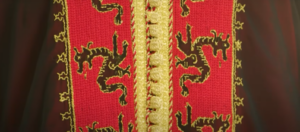
Each region of Morocco contributes its own distinctive hallmark. In Tetouan, taajira embroidery draws inspiration from floral motifs and the color palette of traditional zellige. In Rabat, tarz rbati combines floral embroidery on fine and sumptuous fabrics, while in Azemmour, zoomorphic motifs of dragons and lions characterize tarz azemmouri. In Fez, embroidery in gold and silver threads, known as ntaâ, features complex designs such as the peacock, which is especially used for the bride during the henna ceremony. Oujda, Tiznit, and Meknes contribute additional techniques involving passementerie, silk buttons, and pearls, reflecting the country’s cultural diversity and the richness of its artisanal tradition.
Cultural Symbolism
The caftan is also a social and cultural symbol. It is worn at weddings, family celebrations, religious festivities, and official events. For many women, wearing a caftan means honoring tradition and reaffirming their cultural identity. The garment is not static: it evolves by incorporating new trends without losing its essence. Contemporary designers reinterpret the caftan year after year, blending traditional techniques with modern styles and bringing it onto international fashion stages, demonstrating that cultural heritage can engage in dialogue with contemporary creativity.
UNESCO Recognition
The inscription of the caftan on UNESCO’s Intangible Cultural Heritage List also highlights its educational dimension and the importance of intergenerational transmission. Programs such as “Treasures of Moroccan Traditional Arts” enable young artisans to learn techniques including embroidery, brocade, and the making of buttons and passementerie. In this way, the knowledge and skills that sustain the caftan are kept alive and accessible, preserving a tradition that continues to hold deep meaning in the everyday lives of communities.
The Moroccan caftan is a tradition that looks to the future without forgetting its roots.
This international recognition reaffirms that the caftan is not merely a garment: it is a living tradition, constantly evolving, that celebrates the memory and creativity of Morocco. Every thread, every embroidery, and every piece of passementerie tells the story of a country and its people, and its protection ensures that future generations will continue to enjoy and learn from this rich cultural heritage.

Referencias:
Ministry of Youth, Culture and Communication. History of the Caftan. https://www.maroc.ma/es/historia-de-marruecos/mediateca/historia-del-caftan
Ministry of Youth, Culture and Communication. (2026). Rabat‑Salé‑Kénitra: Intangible Heritage. https://www.maroc.ma/es/cultura-de-marruecos/patrimonio-inmaterial/rabat-sale-kenitra
UNESCO. (2025). The Moroccan caftan: Art, technique, and traditions. https://ich.unesco.org/es/RL/el-caftan-marroqui-arte-tecnica-y-tradiciones-02077